

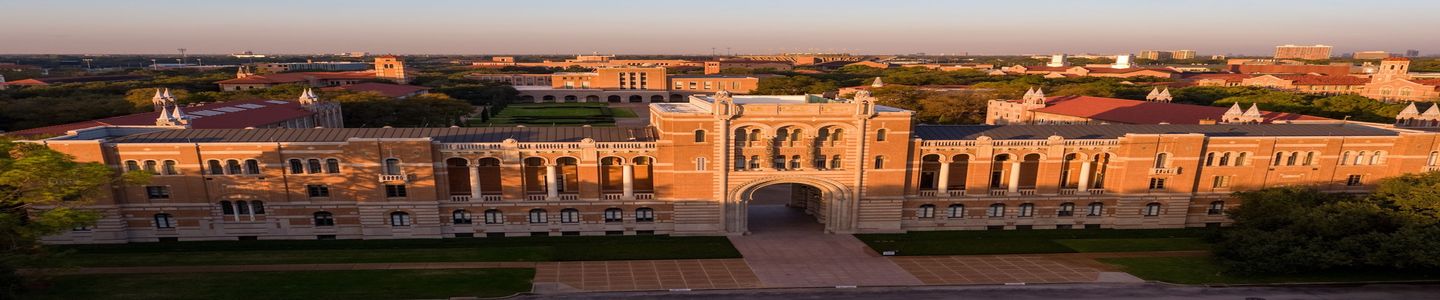

Rice University Courses and Fees 2026


Rice University fees for Indian students planning the Fall 2027 intake sit at a first-year cost of attendance of $92,654 (₹80.61 Lakhs) at the officially published 2026-27 rate, with undergraduate tuition of $71,140 (₹61.89 Lakhs) per year for Years 1 to 3 and $65,280 (₹56.79 Lakhs) for Year 4. Rice’s most Indian-applied graduate tracks are the Master of Data Science, Master of Computer Science, and the Jones Graduate School MBA, with PhD admits fully funded through a tuition waiver plus a $37,000 to $40,000 (₹32.19 to ₹34.80 Lakhs) annual stipend.
Fall 2027 is the intake in play, with the Early Decision I deadline of 15 November 2026 the first hard checkpoint for undergraduate applicants; Fall 2028 opens next. Rice is need-aware for international undergraduates but meets 100 percent of demonstrated need with institutional grant aid for admitted international freshmen, which materially changes what an Indian family actually pays.
- Undergraduate tuition (Years 1 to 3), 2026-27: $71,140 (₹61.89 Lakhs) per year
- Undergraduate tuition (Year 4 plus), 2026-27: $65,280 (₹56.79 Lakhs) per year
- Room and board, 2026-27: $20,530 (₹17.86 Lakhs) per year
- Mandatory fees, 2026-27: $984 (₹85,608) per year
- Trustee Distinguished Scholarship: $25,500 to $27,000 (₹22.19 to ₹23.49 Lakhs) per year
- PhD annual stipend: $37,000 to $40,000 (₹32.19 to ₹34.80 Lakhs), plus full tuition waiver
A four-year Rice undergraduate degree at sticker price totals roughly $364,756 (₹3.17 Crore) before any aid, though the institutional grant for international admits routinely trims that by 40 to 70 percent for families who qualify. All INR values in this article use 1 USD = ₹87.00 (xe.com, 12 August 2026).
Fall 2027 Intake: Rice University Fees Planning Window
Intake: Fall 2027 undergraduate applications are open on the Common App. Early Decision I closes 15 November 2026, Early Decision II on 4 January 2027, Regular Decision on 1 February 2027. Rice does not run a spring undergraduate intake; graduate deadlines vary by department.
Fee update: The Fall 2027 cohort will be billed at the 2027-28 rate. Rice’s published increase for 2026-27 was 6.5 percent, taking undergraduate tuition from $66,798 (₹58.11 Lakhs) to $71,140 (₹61.89 Lakhs); a comparable step in 2027-28 would land undergraduate tuition near $75,764 (₹65.91 Lakhs) per year.
When to pay: The enrolment deposit follows admission notification, which lands in mid-December 2026 for ED1, mid-February 2027 for ED2, and by 1 April 2027 for Regular Decision applicants. Full instalment schedule and wire mechanics sit in the Rice University Tuition Deposit and Payment Options section below.
Scholarships: Rice’s need-based institutional grant for international freshmen must be requested in Year 1, at the time of admission application. Indian external awards (Inlaks, JN Tata, KC Mahindra, Aga Khan, Narotam Sekhsaria) open their Fall 2027 cycles between November 2026 and March 2027; none close within the next six weeks, so plan the SAT, TOEFL, and essay work first.
>> Rice University Admissions for Indian Students, Deadlines and Requirements: Full Admissions Guide
Table of Contents
- Rice University Tuition Fees by Programme
- Rice University Fee Trend by Year
- Cost of Living in Houston for Indian Students at Rice University
- Total Cost of Studying at Rice University
- Rice University Scholarships for Indian Students
- Rice University Tuition Deposit and Payment Options
- Hidden Costs of Studying at Rice University
- Fee Saving Strategies for Indian Students at Rice University
- Is Rice University Worth the Cost for Indian Students
- Rice University Fees FAQs
Rice University Tuition Fees by Programme
Rice publishes one sticker undergraduate tuition rate that applies to every major, then discounts Year 4 by roughly 8 percent. Graduate tuition varies materially by school, with the Jones Graduate School of Business, the School of Engineering and Computing, and the Wiess School of Natural Sciences all pricing separately.
Rice University Undergraduate Fees: Fall 2027 Cohort
Undergraduate tuition applies uniformly across the eight schools at Rice. The Year 4 reduction, unusual in US private universities, materially lowers the full-degree cost for anyone finishing on time.
| Programme Year | Annual Tuition (USD) | Annual Tuition (INR) | Application Fee (USD) |
|---|---|---|---|
| Undergraduate, Year 1 | $71,140 | ₹61.89 Lakhs | $75 |
| Undergraduate, Year 2 | $71,140 | ₹61.89 Lakhs | Not applicable |
| Undergraduate, Year 3 | $71,140 | ₹61.89 Lakhs | Not applicable |
| Undergraduate, Year 4 | $65,280 | ₹56.79 Lakhs | Not applicable |
Source: Rice News: 2026-27 undergraduate tuition announcement. The $75 (₹6,525) application fee is a Common App payment made once at the point of applying; it does not repeat annually. Fee waivers are available for demonstrated financial hardship.
Rice University Postgraduate Fees: Fall 2027 Cohort
Graduate tuition at Rice is set separately by each school and each programme. The Jones MBA, the professional Master of Computer Science, and the Master of Data Science are the three most Indian-applied taught tracks; PhD admits across all schools receive tuition waivers plus a fixed stipend.
| Programme | Programme Length | Estimated Total Tuition (USD) | Estimated Total Tuition (INR) |
|---|---|---|---|
| PhD (all disciplines) | 5 to 6 years | Fully waived + $37,000 to $40,000 annual stipend | ₹32.19 to ₹34.80 Lakhs stipend per year |
| Master of Data Science (MDS) | 12 to 18 months | [FEE NOT VERIFIED: fetch https://graduate.rice.edu/admissions/costofstudy] | [FEE NOT VERIFIED: fetch https://graduate.rice.edu/admissions/costofstudy] |
| Master of Computer Science (MCS) | 16 months | [FEE NOT VERIFIED: fetch https://graduate.rice.edu/admissions/costofstudy] | [FEE NOT VERIFIED: fetch https://graduate.rice.edu/admissions/costofstudy] |
| Jones MBA (Full-Time) | 2 years | [FEE NOT VERIFIED: fetch https://business.rice.edu/full-time-mba] | [FEE NOT VERIFIED: fetch https://business.rice.edu/full-time-mba] |
| Master of Bioengineering (MBE) | 12 to 24 months | [FEE NOT VERIFIED: fetch https://graduate.rice.edu/admissions/costofstudy] | [FEE NOT VERIFIED: fetch https://graduate.rice.edu/admissions/costofstudy] |
Source: Rice Graduate and Postdoctoral Studies, Cost of Study. Taught master’s tuition at Rice is billed per credit hour and per department; each programme page carries its current-year rate. PhD funding of $37,000 to $40,000 per year (₹32.19 to ₹34.80 Lakhs) is confirmed and covers roughly 90 percent of the graduate cost of attendance.
Note: The published $75 (₹6,525) Common App fee is a one-off. It does not repeat, and Rice waives it for applicants whose household income evidence meets the College Board fee-waiver bar; the waiver applies to Indian nationals too. Grad school application fees vary by department, typically $65 to $85 (₹5,655 to ₹7,395).
Rice University Fee Trend by Year
Rice’s board approves the tuition rate one year at a time. The 2026-27 rate of $71,140 (₹61.89 Lakhs) was set as a 6.5 percent rise over 2025-26, and Rice’s press release framed that as consistent with recent-year practice.
| Academic Year | Undergraduate Tuition (USD) | Undergraduate Tuition (INR) | YoY Change |
|---|---|---|---|
| 2023-24 | [FEE NOT VERIFIED: fetch https://news.rice.edu archive] | [FEE NOT VERIFIED] | Not applicable |
| 2024-25 | [FEE NOT VERIFIED: fetch https://news.rice.edu archive] | [FEE NOT VERIFIED] | Not applicable |
| 2025-26 | $66,798 | ₹58.11 Lakhs | Not applicable |
| 2026-27 (current) | $71,140 | ₹61.89 Lakhs | +6.5% |
| 2027-28 (projected) | $75,764 | ₹65.91 Lakhs | +6.5% projected |
Source: Rice News: 2026-27 undergraduate tuition announcement. The 2025-26 figure is back-calculated from the announced 6.5 percent increase to the 2026-27 rate. The 2027-28 projection assumes the same 6.5 percent step and is not a Rice-published figure.
Key Insight: A student joining the Fall 2027 intake will be billed at the 2027-28 rate, projected at roughly $75,764 (₹65.91 Lakhs) per year. Over a four-year degree, that is close to ₹22 Lakhs more than a Fall 2025 admit paid, holding the rupee flat. Applying in the ED1 round on 15 November 2026 does not lock a lower fee; it only locks the admission, so budget for the 2027-28 rate regardless of round.
Cost of Living in Houston for Indian Students at Rice University
Rice’s own room-and-board figure for 2026-27 is $20,530 (₹17.86 Lakhs) per year, which covers on-campus college housing and the meal plan. Houston is materially cheaper than Boston, New York, or the Bay Area; a single graduate student living off campus in West University Place or Museum District typically spends $1,800 to $2,400 (₹1.57 to ₹2.09 Lakhs) per month all-in.
| Expense | Monthly (USD) | Monthly (INR) | Annual (INR) | Notes for Indian Students |
|---|---|---|---|---|
| On-campus housing + meal plan (undergrad) | $1,711 | ₹1.49 Lakhs | ₹17.86 Lakhs | Rice’s published 2026-27 rate, covers residential college housing and Servery meal plan. |
| Off-campus 1-BHK, near-campus zip codes | $1,400 to $1,800 | ₹1.22 to ₹1.57 Lakhs | ₹14.63 to ₹18.79 Lakhs | Zip 77005 and 77030 are walkable to campus; look for graduate-student shares to halve rent. |
| Groceries (Indian cooking, H-E-B + Patel Bros) | $250 to $350 | ₹21,750 to ₹30,450 | ₹2.61 to ₹3.66 Lakhs | Patel Brothers in Hillcroft carries full Indian range; Costco run monthly cuts costs 20 percent. |
| Transport (METRO Rail + occasional Uber) | $50 to $120 | ₹4,350 to ₹10,440 | ₹52,200 to ₹1.25 Lakhs | METRO Rail Red Line stops at Rice; student pass is discounted. A car is optional, not required. |
| Health insurance (Rice waivable plan) | $275 | ₹23,925 | ₹2.87 Lakhs | Rice requires health insurance; the university plan is auto-billed unless you show comparable coverage. |
| Utilities + phone + internet | $150 to $200 | ₹13,050 to ₹17,400 | ₹1.57 to ₹2.09 Lakhs | Off-campus only; on-campus students have this included in housing. |
| Personal, laundry, occasional dining | $200 to $300 | ₹17,400 to ₹26,100 | ₹2.09 to ₹3.13 Lakhs | Houston restaurant costs run 30 to 40 percent below coastal US metros. |
Sources: Rice University International Students financial aid page for room-and-board; Houston off-campus and city-level figures from Numbeo, Houston, cross-checked against university international office estimates.
Note: Rice requires all first-year undergraduates to live on campus in the residential college system, so the on-campus $20,530 (₹17.86 Lakhs) rate applies. From Year 2 onward, many international students shift off-campus with room-mates to cut annual housing by $4,000 to $6,000 (₹3.48 to ₹5.22 Lakhs).
Houston runs no state income tax, so a graduate research assistant’s stipend goes further than the same nominal dollar figure in Massachusetts or California. Health insurance is mandatory and typically not covered by the Trustee Distinguished Scholarship, so it lands as a real monthly line on the family budget.
Currency Tip: Rice’s first tuition instalment for the Fall 2027 cohort falls due in early August 2027 for a 15 August programme start. Set up a Flywire or Convera transfer via Rice’s Cashier’s Office rather than a raw SWIFT wire; the university’s preferred processors clear at 2 to 3 percent better on the day-of rate. Book a portion of the fee at 1 USD = ₹87.00 or better if the rupee sits in that band during the sixty days before the deadline.
Total Cost of Studying at Rice University
The Rice-published first-year cost of attendance for an undergraduate is $92,654 (₹80.61 Lakhs). That figure comprises tuition, on-campus room and board, and mandatory fees; personal expenses and travel between India and Houston sit on top.
| Scenario | Tuition (USD) | Living (USD) | Mandatory Fees (USD) | Total Year 1 (INR) |
|---|---|---|---|---|
| Undergraduate, on-campus, no aid | $71,140 | $20,530 | $984 | ₹80.61 Lakhs |
| Undergraduate, on-campus, with Trustee Distinguished Scholarship ($27,000) | $44,140 (net) | $20,530 | $984 | ₹57.12 Lakhs |
| Undergraduate, on-campus, meets 100% demonstrated need (typical 50% grant) | $35,570 (net) | $20,530 | $984 | ₹49.66 Lakhs |
| Graduate PhD, on-campus, fully funded | $0 (waiver) | $20,530 | $984 | ₹18.71 Lakhs living cost, offset by $37,000 to $40,000 stipend |
Sources: Rice International College Affordability page; Rice Graduate Cost of Study. Living cost figures use Rice’s published 2026-27 room-and-board rate applied on a 10-month basis for undergraduates (residential colleges close during summer) and a 12-month basis for graduate students who remain in Houston year-round for research. Mandatory Fees include the Student Services, Recreation, and Health fees; the Student Visa (F-1) SEVIS fee of $350 (₹30,450) and the DS-160 processing fee of $185 (₹16,095) are separate one-time costs not shown in this table.
Across four years at sticker price, the total undergraduate outlay is roughly $364,756 (₹3.17 Crore), reflecting three years at the Year 1 to 3 rate plus the discounted Year 4. An education loan of ₹1 Crore, sized to cover the post-scholarship residual for a family that qualifies for partial aid, works out to approximately ₹1.35 Lakhs per month on a 10-year, 10.5 percent SBI Global Ed-Vantage schedule.
Key Insight: For a Fall 2027 admit, the single lever that moves the sticker price most is the Rice institutional grant, requested at the point of admission application. A typical demonstrated-need award for an Indian family cuts the four-year cost from ₹3.17 Crore to roughly ₹1.60 to ₹1.90 Crore. Lock the CSS Profile submission (code 6609) before the ED1 date of 15 November 2026 so aid is decided in the same envelope as admission.
Rice University Scholarships for Indian Students
Rice’s approach to affordability rests on need-based institutional aid rather than a merit-heavy scholarship menu. The Rice Investment programme, which fully covers tuition for US families under $200,000 in income, does not apply to international students. Indian applicants are instead considered for the need-based Rice Institutional Grant and a handful of merit awards.
Rice University Institutional Scholarships and Grants
| Scholarship | Level | Value (per year) | Application Required |
|---|---|---|---|
| Rice Need-Based Institutional Grant (International) | Undergraduate freshman | Meets 100% demonstrated need | CSS Profile (code 6609) + application; must request in Year 1 |
| Trustee Distinguished Scholarship | Undergraduate freshman | $25,500 to $27,000 (₹22.19 to ₹23.49 Lakhs) | Automatic on admission; no separate form |
| President’s Scholarship | Undergraduate freshman | Full tuition | Automatic on admission; highest-tier merit |
| Ruth Simmons Scholarship | Undergraduate freshman | Variable, need + merit | Automatic on admission; established 2023 |
| Graduate Fellowship + Tuition Waiver | PhD, all disciplines | Full tuition + $37,000 to $40,000 (₹32.19 to ₹34.80 Lakhs) stipend | Automatic on PhD offer |
| I-ACED Program | Low-income master’s in Engineering, CS, Math, Data Science | Partial funding, variable | Programme-specific application |
Source: Rice Financial Aid: International Students. International transfer applicants are not eligible for institutional aid; the aid decision must be made in the first year of study and cannot be requested later.
External Indian Scholarships for Rice University
Every Indian-origin funder listed below is open to Rice-admitted students. Application windows for Fall 2027 sit between November 2026 and April 2027, none of which close within the next six weeks.
| Scholarship | Value | Fall 2027 Deadline | Best Fit |
|---|---|---|---|
| Inlaks Shivdasani Foundation | Up to $100,000 (₹87.00 Lakhs) full cost | Late March 2027 (typical) | Master’s, PhD, professional programmes |
| JN Tata Endowment | Up to ₹10 Lakhs loan scholarship | Late March 2027 (typical) | All postgraduate levels, gift + loan hybrid |
| KC Mahindra Scholarship | Up to ₹8.5 Lakhs interest-free loan | End March 2027 (typical) | Master’s abroad |
| Narotam Sekhsaria Foundation | Up to ₹20 Lakhs interest-free loan | Late January 2027 (typical) | Master’s, PhD in select disciplines |
| Aga Khan Foundation ISP | 50% grant + 50% loan, need-based | End March 2027 (typical) | Master’s, PhD, developing-world nationals |
Sources: Inlaks Foundation; JN Tata Endowment; KC Mahindra Education Trust; Narotam Sekhsaria Foundation; Aga Khan Foundation India International Scholarship Programme. Deadlines shown are typical windows; each foundation confirms exact dates in the year of the cycle.
Tip for Indian Students: The single most valuable move for the Fall 2027 intake is to file the CSS Profile with Rice’s code 6609 before 15 November 2026 for ED1 or 1 February 2027 for Regular Decision. The institutional grant, worth up to ₹40 to ₹50 Lakhs per year in some cases, is only decided in Year 1 and never revisited later. Layer Inlaks (deadline late March 2027) on top for the residual, but Rice’s own aid is the anchor.
Rice University Tuition Deposit and Payment Options
Rice’s enrolment deposit for admitted undergraduates is typically $500 (₹43,500), non-refundable, credited toward the first-semester tuition. It secures the seat and triggers the I-20 issuance needed for the F-1 student visa appointment. Graduate department deposits vary; the Jones MBA is materially higher.
Methods of Payment for International Students
- Flywire or Convera: Rice’s Cashier’s Office directs international students to these two university-partnered processors, which quote a locked INR-to-USD rate for the transfer and typically clear in 3 to 5 working days.
- SWIFT bank wire: Direct transfer from an Indian bank under the LRS $250,000 annual limit, with the A2 form filed. Costs $30 to $50 (₹2,610 to ₹4,350) plus intermediary bank charges; slower and typically 2 to 3 percent worse on FX than the university providers.
- Education loan disbursement: SBI, HDFC Credila, Avanse, and Auxilo disburse directly to Rice’s account against fee invoices. Give the lender 4 to 6 weeks lead time from I-20 issuance.
- Forex card: Practical for small charges (application fees, orientation deposits) but not for full tuition; card limits and per-transaction caps make it unsuitable for the main fee.
Steps to Pay the Tuition Fee for International Students
- Accept the offer through the Rice applicant portal and pay the enrolment deposit of $500 (₹43,500) within the deadline stated in the admission letter, typically two to three weeks after decision.
- Receive the I-20 from Rice’s Office of International Students and Scholars once the deposit clears and financial documents are on file.
- Complete the CSS Profile and international student certification of finances if aid is being requested; aid packages finalise in mid-December 2026 for ED1, mid-February 2027 for ED2, and by 1 April 2027 for Regular Decision.
- Book the F-1 visa appointment at a US Consulate in India; pay the SEVIS I-901 fee of $350 (₹30,450) and DS-160 processing fee of $185 (₹16,095).
- Pay the Fall semester balance through Flywire or Convera by the Rice Cashier’s due date, typically the first week of August 2027, and keep every receipt for the visa file and for future loan reimbursement.
Source: Rice Financial Aid, International Students; Rice Cashier’s Office payment guidance.
Tip for Indian Students: The Fall 2027 tuition first instalment falls due in the first week of August 2027 for the 15 August 2027 programme start. Initiate the wire or Flywire transfer 10 to 14 working days before the Rice due date so any bank hold, LRS documentation query, or A2 form correction does not delay the CAS-equivalent enrolment confirmation. A late payment can push the F-1 visa interview and delay travel.
Hidden Costs of Studying at Rice University
Beyond tuition and Rice’s own $20,530 (₹17.86 Lakhs) room-and-board figure, an Indian student joining Fall 2027 should budget roughly ₹5 to ₹7 Lakhs of first-year costs that never appear on the Bursar invoice.
- F-1 visa SEVIS fee: $350 (₹30,450), paid once, before the DS-160 filing.
- DS-160 processing fee: $185 (₹16,095), non-refundable, paid before the consulate interview.
- One-way flight India to Houston: ₹75,000 to ₹1.10 Lakhs depending on booking window; direct is via Air India Newark-Houston or a one-stop via Doha/Dubai.
- Health insurance top-up or dental coverage: $200 to $500 (₹17,400 to ₹43,500) per year on top of the base Rice plan.
- Initial setup (bedding, kitchen basics, winter jacket): ₹40,000 to ₹60,000 at Target or Walmart in the first two weeks.
- Books, course packs, lab kits: $500 to $1,200 (₹43,500 to ₹1.04 Lakhs) per year, varying sharply by major (engineering higher, humanities lower).
- Duolingo English Test or TOEFL retake: $60 to $265 (₹5,220 to ₹23,055) if a re-sit is needed to hit Rice’s minimum.
- Wire transfer or FX conversion loss: ₹40,000 to ₹1 Lakh per year even with Flywire/Convera; more if SWIFT is used.
Budget approximately ₹5 to ₹7 Lakhs for first-year hidden costs, held in a foreign travel card or separately from the tuition wire.
Note: The health insurance line is the one most Indian families under-budget. Rice auto-bills the student health plan at roughly $3,300 (₹2.87 Lakhs) per year and adds it to the Bursar invoice unless a comparable US-based coverage waiver is on file by the deadline. Indian travel insurance does not qualify for the waiver; it must be a US plan meeting Rice’s stated benefit floor.
Fee Saving Strategies for Indian Students at Rice University
For the Fall 2027 intake, the highest-value lever is the institutional grant application; every dollar saved there is a dollar not borrowed. The remaining strategies compound around that anchor.
- File the CSS Profile with code 6609 alongside the admission application: the institutional grant, capped only by demonstrated need, is worth up to $40,000 (₹34.80 Lakhs) per year for qualifying Indian families and is only decided in Year 1.
- Move off-campus from Year 2: a shared apartment in zip 77005 with two room-mates typically costs $700 to $900 (₹60,900 to ₹78,300) per month against Rice’s on-campus $1,711 (₹1.49 Lakhs), saving ₹8 to ₹10 Lakhs across the remaining three years.
- Take on-campus employment up to 20 hours per week: F-1 rules permit on-campus work, and typical Rice research assistant or library roles pay $12 to $18 (₹1,044 to ₹1,566) per hour, contributing $6,000 to $10,000 (₹5.22 to ₹8.70 Lakhs) per academic year.
- Claim Section 80E tax deduction: the parent servicing the education loan can deduct the full interest paid for up to 8 years under Section 80E of the Income-Tax Act, a real annual saving of ₹80,000 to ₹1.50 Lakhs at typical loan sizes.
- Plan for the F-1 OPT and STEM-OPT extension: Rice STEM graduates qualify for 12 months of Optional Practical Training plus a 24-month STEM extension, giving up to 36 months of US work rights that materially reduce loan-payback risk.
Tip for Indian Students: For a Fall 2027 admit, the CSS Profile is the single highest-value action, worth up to ₹34.80 Lakhs per year across four years, or roughly ₹1.40 Crore across the degree. Skipping it in Year 1 is irreversible; Rice will not grant institutional aid to an international student who did not request it at the point of admission.
Is Rice University Worth the Cost for Indian Students
At a sticker cost of ₹3.17 Crore over four undergraduate years, or roughly ₹80.61 Lakhs in the first year alone, Rice is a top-tier US private-university outlay. The value equation for an Indian family hinges on two returns: the demonstrated-need aid that Rice actually pays out (which typically halves the sticker), and the STEM-OPT window that turns the degree into three years of US work eligibility.
Rice’s medium-run economic case rests on placement into US technology, energy, and healthcare employers concentrated in Houston, Austin, and the Bay Area, plus the Jones MBA pipeline into consulting and investment banking. The 36-month STEM-OPT window materially de-risks the loan; a graduate earning $90,000 to $130,000 (₹78.30 Lakhs to ₹1.13 Crore) in the first year post-degree can service a ₹1 Crore loan comfortably.
Against an EMI of roughly ₹1.35 Lakhs per month on a ₹1 Crore, 10-year, 10.5 percent loan, a Rice graduate on a $110,000 (₹95.70 Lakhs) starting salary retains around ₹5 Lakhs per month post-tax and post-EMI on OPT, comfortably above the debt-service floor.
Key Insight: For a Fall 2027 admit who receives a typical need-based institutional grant, the four-year net cost drops from ₹3.17 Crore to roughly ₹1.60 to ₹1.90 Crore. With a typical US STEM starting salary and 36 months of OPT, the effective loan payback horizon is 5 to 7 years, not the full 10-year loan term.
Rice University’s Fall 2027 intake carries a first-year sticker cost of ₹80.61 Lakhs, materially reduced by the need-based institutional grant that must be requested at the point of admission via the CSS Profile (code 6609). A typical Indian family receiving 50 percent aid ends up at ₹49.66 Lakhs in Year 1, financing the residual with a ₹1 Crore loan at roughly ₹1.35 Lakhs per month EMI, comfortably serviceable on a US STEM starting salary through the 36-month OPT window. File the CSS Profile before the Early Decision I deadline of 15 November 2026 to lock in aid eligibility in the same envelope as the admission decision.
Rice University Fees FAQs
Ques. What is the total fee for Rice University for Indian students in Fall 2027?
Ans. Rice University’s published cost of attendance for 2026-27 is $92,654 (₹80.61 Lakhs) for the first undergraduate year, comprising $71,140 (₹61.89 Lakhs) tuition, $20,530 (₹17.86 Lakhs) room and board, and $984 (₹85,608) in mandatory fees. Fall 2027 admits will be billed at the 2027-28 rate, projected at roughly $75,764 (₹65.91 Lakhs) tuition based on Rice’s announced 6.5 percent annual increase, taking Year 1 sticker to approximately ₹85 Lakhs.
Ques. Does Rice University offer scholarships to Indian students?
Ans. Yes. International freshmen are eligible for Rice’s need-based institutional grant, which meets 100 percent of demonstrated need through grant aid (no loans). Merit awards include the Trustee Distinguished Scholarship at $25,500 to $27,000 (₹22.19 to ₹23.49 Lakhs) per year, the President’s Scholarship (full tuition), and the Ruth Simmons Scholarship. All are automatic on admission except the institutional grant, which requires a CSS Profile filed with code 6609.
Ques. How much does the Rice University PhD stipend pay?
Ans. Rice PhD students receive a full tuition waiver plus a stipend of $37,000 to $40,000 (₹32.19 to ₹34.80 Lakhs) per year, covering approximately 90 percent of the graduate cost of attendance in Houston. The stipend is automatic on PhD admission across all disciplines and does not require a separate application.
Ques. Is Rice University need-blind for Indian applicants?
Ans. No. Rice is need-aware for international undergraduate applicants, meaning the admissions committee considers the aid request when deciding admission. However, Rice does commit to meeting 100 percent of demonstrated need for admitted international students through institutional grant aid, and admitted students on aid graduate loan-free from Rice’s own package.
Ques. What are the payment methods to pay Rice University tuition from India?
Ans. Rice’s Cashier’s Office directs international students to Flywire and Convera, both of which lock the INR-to-USD rate and clear in 3 to 5 working days. Alternatives include SWIFT bank wire (2 to 3 percent worse FX and higher fees), direct loan disbursement from SBI, HDFC Credila, Avanse, or Auxilo, and forex cards for small application-related charges only.
Ques. When is the Rice University enrolment deposit due for Fall 2027?
Ans. The enrolment deposit of approximately $500 (₹43,500) is due within two to three weeks of admission notification. For Early Decision I candidates admitted in mid-December 2026, the deposit is due before end December 2026; for Regular Decision candidates admitted by 1 April 2027, the deposit is due by 1 May 2027 (National Candidates Reply Date). The deposit is non-refundable but credits toward the first-semester tuition.
Ques. How much does living in Houston cost for a Rice University student?
Ans. Rice’s on-campus room-and-board rate is $20,530 (₹17.86 Lakhs) per year for 2026-27. Off-campus in zip 77005 or 77030, a graduate student living with room-mates spends $1,400 to $1,800 (₹1.22 to ₹1.57 Lakhs) per month all-in, including groceries, transport, and utilities. Houston runs no state income tax, making the after-tax cost lower than comparable Boston or Bay Area cities.
Ques. Can I work part-time while studying at Rice University on an F-1 visa?
Ans. Yes. F-1 visa rules permit up to 20 hours per week of on-campus employment during term and 40 hours per week during official breaks. Rice research assistant and library roles typically pay $12 to $18 (₹1,044 to ₹1,566) per hour, contributing $6,000 to $10,000 (₹5.22 to ₹8.70 Lakhs) per academic year toward living costs.
Ques. What is the Rice University OPT and STEM-OPT eligibility?
Ans. Rice graduates in eligible STEM fields qualify for 12 months of standard Optional Practical Training plus a 24-month STEM-OPT extension, totalling up to 36 months of US work eligibility after the degree. This is the current federal rule in force on 12 August 2026 and materially strengthens the loan-payback case for engineering, computer science, and data science graduates.
Ques. Does Rice University increase fees every year?
Ans. Yes. Rice’s board sets tuition annually, with the 2026-27 rate rising 6.5 percent over 2025-26. A comparable step in 2027-28 would take undergraduate tuition to approximately $75,764 (₹65.91 Lakhs) per year. Fall 2027 admits should budget for the 2027-28 rate, not the currently published 2026-27 figure, and hold a 5 to 7 percent buffer per subsequent year.
Ques. Can Indian students transfer to Rice University and still get financial aid?
Ans. No. Rice explicitly states that international transfer applicants are not eligible for institutional aid. Only international students admitted as freshmen who requested aid in Year 1 through the CSS Profile are eligible for the need-based institutional grant, and the request cannot be made retroactively in a later year.
Popular Programs and Important Dates
| Program | Important Dates | Fees | Application Fees | Eligibility | Financial Aid |
|---|---|---|---|---|---|
MCS 1 year | Application Deadline for Spring Intake (1st Nov 2026) | USD 62,474 /Yr | 85 | GPA:3.0, TOEFL: 90, IELTS: 7, DET: 115 | |
Application Deadline for Spring Intake (15th Nov 2026) Application Deadline for Fall Intake (1st Feb 2027) | USD 62,474 /Yr | 85 | GPA:3.0, TOEFL: 90, IELTS: 7, DET: 115 | ||
Master of Computational Science 2 years | Application Deadline for Fall Intake (15th Jan 2027) Late Application Deadline for Fall Intake (28th Feb 2027) | USD 62,474 /Yr | 85 | GPA:3.0, TOEFL: 90, IELTS: 7, DET: 115 | |
MS Bioengineering 2 years | Application Deadline for Spring Intake (15th Oct 2026) Application Deadline for Fall Intake (1st Feb 2027) | USD 62,474 /Yr | 85 | GPA:3.0, TOEFL: 90, IELTS: 7, DET: 115 | |
MBA Finance 2 years | USD 76,073 /Yr | 85 | GPA:3.0, TOEFL: 90, IELTS: 7, DET: 115 | - | |
Early Decision I Application Deadline for 2027 Intake (1st Nov 2026) Early Decision II Application Deadline for 2027 Intake (4th Jan 2027) Regular Decision Application Deadline for 2027 Intake (4th Jan 2027) | USD 71,140 /Yr | 75 | 12th grade, TOEFL: 100, IELTS:7, DET:130 | - | |
Application Deadline for Spring Intake (15th Oct 2026) Application Deadline for Fall Intake (15th Jan 2027) | USD 62,474 /Yr | 85 | GPA:3.0, TOEFL: 90, IELTS: 7, DET: 115 | - | |
MBA 2 years | USD 76,073 /Yr | 85 | GPA:3.0, TOEFL: 90, IELTS: 7, DET: 115 | - | |
MAcc 10 months | USD 65,100 /Yr | 100 | GPA:3.0, TOEFL: 90, IELTS: 7, DET: 115 | - | |
PhD Physics 4 years | Application Deadline for Fall Intake (15th Dec 2026) | USD 62,474 /Yr | 85 | GPA:3.0, TOEFL: 4.5, IELTS: 7, DET: 115 |
Do you think the Dates are wrong ? Report Here
STEM Course
Master of Science [MS] Bioengineering
Course Finder - Search from 50K+ courses
Popular Streams:
SUBSCRIBE TO OUR NEWS LETTER



Comments