



Education Journalist | Study Abroad Lead
Indian students planning to study abroad are increasingly moving away from an Ivy League-first approach, opting instead for universities that offer stronger return on investment, industry-aligned programmes, and clearer post-study work opportunities, education experts say.
While elite universities in the United States and the United Kingdom continue to attract high-achieving applicants, counsellors report that fewer students are treating Ivy League admission as the default benchmark of success. Instead, cost, employability, and visa stability are emerging as the primary drivers of decision-making.
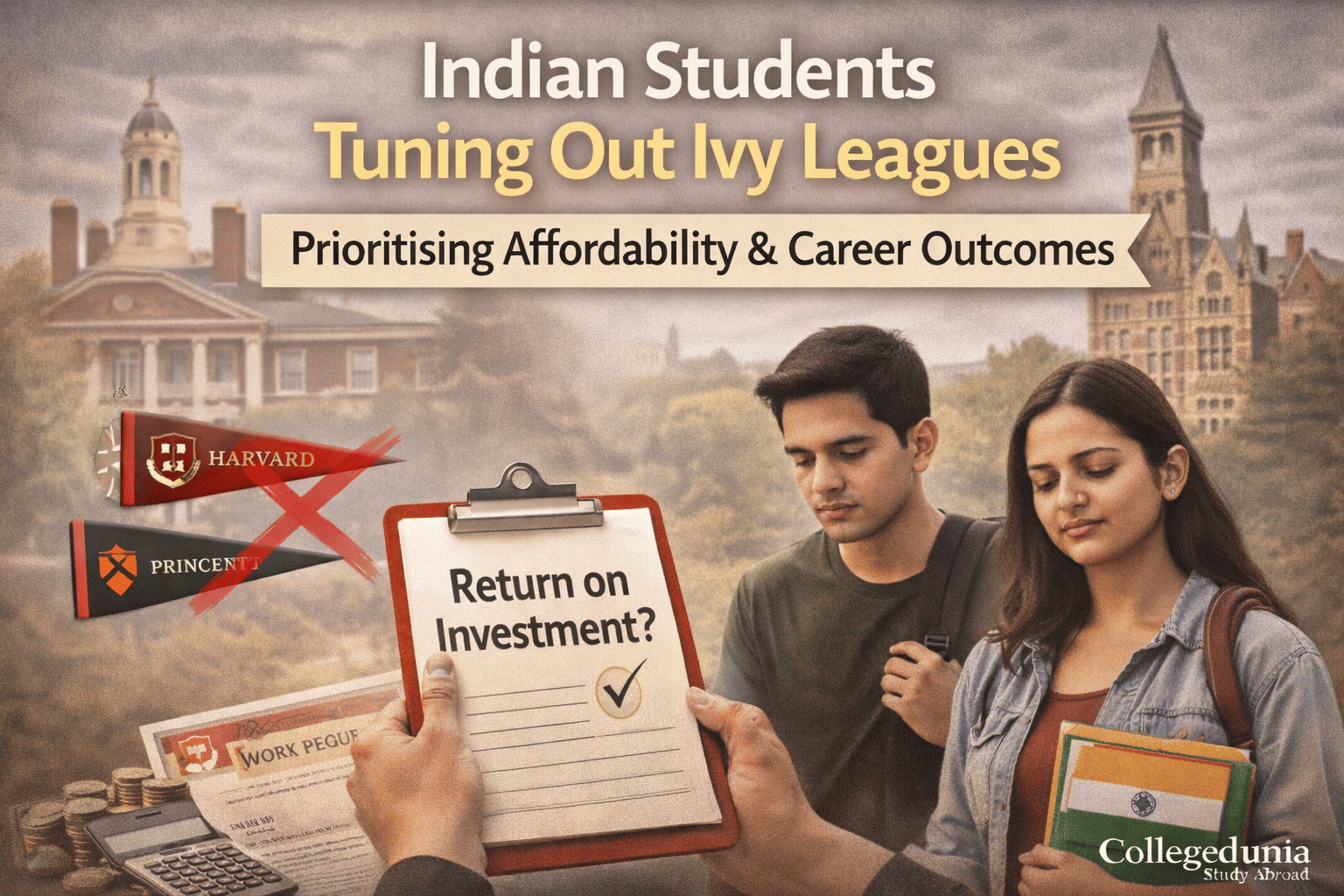
This shift comes amid rising tuition fees at top-ranked institutions, tighter immigration policies in key destinations, and growing awareness that university prestige does not always guarantee better career outcomes.
According to experts tracking study abroad trends, Indian applicants are now evaluating universities based on practical considerations such as programme relevance, internship access, alumni outcomes, and the length of post-study work visas. These factors are increasingly outweighing brand value alone, particularly for students targeting professional degrees in STEM, business, data analytics, and management.
The high cost of elite education is a major factor behind the change.
- Annual tuition at top US universities can exceed USD 60,000, pushing many students to explore public universities and mid-ranked private institutions that offer comparable academic quality at significantly lower costs.
- At the same time, uncertainties around post-study employment have made students more cautious.
- With visa rules evolving in the US, UK, Canada, and Australia, students are prioritising destinations and institutions that offer predictable pathways from education to employment.
Experts stress that the trend does not reflect declining academic ambition. Instead, it marks a more strategic and outcome-driven approach to global education planning. Elite universities continue to appeal to students pursuing research-focused careers or doctoral pathways, but they represent a narrower segment of overall demand.
For most Indian students, universities with strong industry linkages, applied curricula, and active career support services are now seen as better aligned with long-term goals. This recalibration mirrors a broader global trend, as international students increasingly diversify their destination choices beyond traditional elite institutions.
As the 2026 intake cycle approaches, education advisors recommend that students focus less on rankings and more on fit — assessing whether a programme supports their academic interests, financial capacity, and career plans.
The evolving mindset suggests that success in study abroad is no longer defined by where a student studies, but by what opportunities the education ultimately enables.



Comments