




Bachelor of Technology [B.Tech] (Graphic Communications Management)
Field of Study:
$30,599 /Yr

Toronto Metropolitan University B.Tech Graphic Communications Management: Program Overview
Toronto Metropolitan University (TMU) is a leading Canadian research institution located in Ontario’s vibrant city of Toronto. The Bachelor of Technology in Graphic Communications Management is a 4-year full-time undergraduate programme that uniquely blends creativity, technology, and business management. This specialization teaches students to design, produce, and manage printed materials, packaging, and other physical media while building expertise in design software, sustainable packaging, visual communication, and production management.
With over 75 years of industry connections and a mandatory paid internship, graduates emerge with strong portfolios, real-world experience, and networks spanning Canada and internationally. The programme is designed for Indian students seeking practical, industry-ready education that leads directly to employment in the fast-growing graphic communications sector. TMU is ranked 711-720 globally by QS in 2026.
Indian applicants typically represent 10-15% of international intake at TMU. The programme offers four specialization tracks: Packaging, Digital Graphics, Publishing, and Leadership, allowing students to tailor their degree to career goals. With 88% employment within six months of graduation, this is one of Canada’s most career-focused communications degrees.
Toronto Metropolitan University Graphic Communications: Cost & Fee Breakdown
International tuition at TMU for the B.Tech Graphic Communications Management programme is C$36,845 per year for the 2026-2027 academic year. Over four years, total tuition reaches C$147,380, equivalent to ?10,037,797 in Indian Rupees at the current FX rate of 68.14.
Ancillary fees (technology, health, transit) range from C$800 to C$1,200 annually, adding approximately C$4,000 to C$4,800 across the programme. Books and materials cost C$600 to C$900 per year, totaling C$2,400 to C$3,600 over four years. A one-time tuition deposit of C$2,350 (?160,129) is required at the time of application.
Total programme cost for international students: C$156,130 to C$158,330 (?10,629,853 to ?10,781,223 INR). This includes tuition, ancillary fees, and books. Housing and living costs in Toronto average C$2,100 per month (?143,094), or C$25,200 annually (?1,717,128). Over four years, total living costs run C$100,800 to C$120,000 (?6,868,512 to ?8,177,280 INR) depending on shared accommodation choices.
| Expense Category | Annual (C$) | Annual (?) | 4-Year Total (C$) | 4-Year Total (?) |
|---|---|---|---|---|
| Tuition (International) | 36,845 | 2,509,117 | 147,380 | 10,036,468 |
| Ancillary Fees | 1,000 | 68,140 | 4,000 | 272,560 |
| Books & Materials | 750 | 51,105 | 3,000 | 204,420 |
| Housing (Shared) | 10,800 | 736,152 | 43,200 | 2,944,608 |
| Utilities, Groceries, Transport | 14,400 | 982,816 | 57,600 | 3,931,264 |
| Total | 63,795 | 4,347,330 | 255,180 | 17,389,320 |
Indian students applying from abroad are not eligible for provincial or federal need-based aid. The tuition deposit is credited toward first-semester fees. Paid internship earnings (C$18,000 to C$22,000 over one term) help offset fourth-year costs for students enrolled in co-op or work-placement components.
Scholarships & Financial Aid for International Students
Toronto Metropolitan University awards over C$20 million annually in scholarships, bursaries, and awards across all programmes. International students are eligible for merit-based entrance scholarships. Students completing secondary education in Canada with a final average of 86% or higher receive guaranteed renewable scholarships ranging from C$750 to C$3,000 per year (?51,105 to ?204,420 annually).
The International Student Leadership Award (ISLA) is the flagship scholarship for international students. ISLA offers C$10,000 (?681,400) in competitive support for up to 53 recipients in Fall 2026 intake and up to 20 in Winter 2027 intake. Applicants need strong academic records (typically 85%+), demonstrated leadership, and completion of the online application form. The Fall 2026 deadline has been extended to February 17, 2026.
For Indian students without prior Canadian secondary education, TMU offers limited entry-level scholarships to high-achieving applicants (85%+ in relevant subjects). Employer sponsorship is recommended to supplement available aid. Work-study positions on campus pay C$15 to C$18 per hour (?1,022 to ?1,227). Students in paid internships between third and fourth year earn C$18,000 to C$22,000 (?1,226,520 to ?1,499,080) over one term, which significantly offsets final-year expenses.
Additional funding sources include external scholarships from government agencies, industry bodies, and Canadian organizations supporting international talent. Indian students are encouraged to explore grants from the Canadian Bureau for International Education (CBIE) and India-Canada bilateral scholarship programmes. No specific scholarships are exclusive to the Graphic Communications programme; awards are distributed across TMU’s portfolio based on need and merit.
Admission Requirements & Eligibility
The B.Tech Graphic Communications Management programme at TMU is a Grades-Only programme, meaning admission decisions are based solely on academic performance. International applicants must hold an equivalent secondary diploma (such as the Indian Class 12 from CBSE or ICSE board). A minimum overall average of 70% establishes eligibility; however, competitive admission typically requires 75% to 82% for Indian applicants due to programme demand.
Specific subject prerequisites include English (minimum 70%), Mathematics (Advanced Functions or Calculus, minimum 70%), and one elective from Physics, Chemistry, or Computer Science (minimum 70%). Students whose secondary education was not in English must demonstrate English language proficiency. The International English Language Testing System (IELTS) requires an overall band of 6.5 with no band below 6.0. Alternatively, TOEFL iBT score of 83 (minimum 20 per section) or equivalent is accepted.
TMU does not require standardized tests such as SAT or ACT; Canadian domestic high school marks or certified international equivalents suffice. Applicants must convert and certify all secondary marks through World Education Services (WES) or similar recognized credential evaluation service. Indian applicants should obtain attested copies of Class 10 and Class 12 mark sheets from their board of education and have them formally evaluated by WES before application submission.
Bachelor’s degree holders are eligible to apply. The programme does not require a portfolio or art aptitude test for admission, though a portfolio is strongly recommended for competitive scholarships. Mature students (21+) with relevant work experience in design, printing, or communications may apply using experience assessment; contact admissions for individual review. Applicants with gaps in education or non-traditional backgrounds are encouraged to discuss circumstances with the programme coordinator prior to submission.
Application Deadlines & Intake Dates
Toronto Metropolitan University operates on a rolling admissions basis for the B.Tech Graphic Communications Management programme. The primary intake is Fall (September), with application review beginning February 1 each year. Priority consideration deadline for Fall 2027 is typically May 1, with final deadline around August 1. Rolling review means early applicants (by March-April) receive decisions within 4 to 6 weeks; late applications may see longer processing times or space constraints.
Winter intake (January) opens for limited places. The Winter 2027 deadline is typically November 1 for priority review and December 1 as final deadline. Indian applicants are advised to apply by April 2027 for Fall 2027 entry to allow adequate time for study permit processing (4 to 8 weeks standard). Applicants requiring a Guarantor Investment Certificate (GIC) for study permit applications should initiate university correspondence by February to ensure all letters and enrollment confirmations arrive in time.
The programme runs full-time, on-campus only; there is no part-time or online option. The fall semester runs September to December (16 weeks). Winter semester runs January to April (16 weeks). The internship block spans May to August (typically 4 months paid work placement), and fourth-year courses resume in September. Graduation occurs the following June, 48 months after initial enrollment. Students may defer admission to the next intake (up to one year) at no penalty after acceptance.
Visa processing timelines are critical: study permit approval typically takes 4 to 8 weeks from submission. Indian applicants should apply to TMU by late March 2027 to allow time for admission letter issuance, visa application, and approval before the September 2027 semester start. Late applications received after June may encounter delays and potential space unavailability.
Course Curriculum & Specialization Options
The B.Tech Graphic Communications Management curriculum is structured to balance creative, technical, and business disciplines. Year 1 covers fundamentals: Digital Design Essentials, Design Principles & History, Digital Photography, Web Development Basics, Business Communications, and Digital Media Production. Students develop proficiency in Adobe Creative Suite (Photoshop, Illustrator, InDesign) and foundational HTML/CSS coding.
Year 2 expands technical and business expertise: Advanced Graphic Design, Print Production Technologies, Packaging Design Fundamentals, Digital Marketing, Project Management Basics, and Supply Chain Introduction. Students work on real-world design projects, gain hands-on experience in printing labs, and begin exploring specialization pathways.
Year 3 deepens specialization. Students select one of four concentrations: Packaging (sustainable materials, structural design, environmental compliance), Digital Graphics (motion graphics, UI/UX design, interactive media), Publishing (editorial design, book production, digital publishing), or Leadership (team management, client relations, strategic planning). Year 3 includes Industry Practicum (4 months paid internship, typically May-August), Production Management, Business Strategy, and a self-directed capstone design project.
Year 4 applies learning to complex industry scenarios: Senior Design Capstone, Advanced Strategic Communications, International Design Studies (optional study abroad), and electives aligned to specialization. Emphasis shifts to portfolio development, industry partnerships, and real-world case study analysis. Guest lectures from leading Canadian design firms, packaging companies, and publishing houses bring current industry perspectives. Students graduate with a professional portfolio ready for employment and optional international credentials (such as Print & Graphics Recognition Program certificates).
Approximately 50% of curriculum is business-focused (management, strategy, finance, client relations), while 50% is technical and creative (design software, production processes, sustainable practices). This balance differentiates TMU’s programme from art-focused graphic design degrees, positioning graduates for production management, brand strategy, and packaging leadership roles—not just design execution.
Student Life & Campus Experience at TMU Toronto
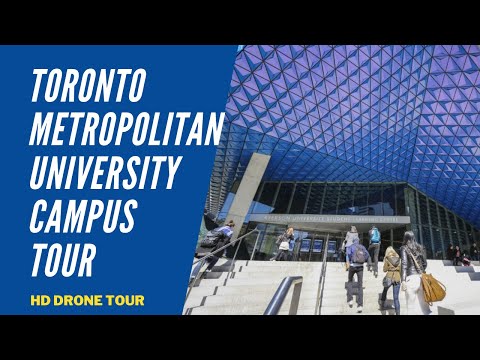
Toronto Metropolitan University is located in downtown Toronto’s Cabbagetown neighbourhood, providing students direct access to Canada’s largest city and a thriving creative industry hub. The campus spans several city blocks with modern classrooms, design labs equipped with state-of-the-art printing and production machinery, collaborative studio spaces, and a student centre featuring cafes, fitness facilities, and event spaces. Living on campus is not required or commonly available; most students rent shared apartments in nearby neighborhoods.
Student housing in Toronto ranges from C$900 to C$1,200 monthly for shared accommodations with utilities included (?61,326 to ?81,768 per month). Many Indian students cluster in neighborhoods like Chinatown, St. George, and King West, which offer affordable rentals and vibrant multicultural communities. Public transit is excellent; a monthly transit pass costs C$150 (?10,221) and covers unlimited streetcar, bus, and subway access across the Greater Toronto Area.
The Graphic Communications Management programme has a dedicated cohort of 80 to 100 students per intake year, creating strong peer networks and collaborative project opportunities. The programme organizes industry networking events, design competitions, and site visits to leading printing and packaging facilities. TMU’s Student Union offers 200+ clubs and societies, including design-focused groups, South Asian student associations, and international student support networks. Annual events include a Design Showcase, industry career fairs, and international cultural celebrations attracting thousands of participants.
On-campus employment in the university’s design services, library, and student services centres pays C$15 to C$18 per hour (?1,022 to ?1,227). Many students work 15-20 hours weekly during academic terms, earning C$360 to C$432 per month (?24,528 to ?29,434 monthly). International students are authorized to work 20 hours per week during term and full-time during academic breaks. Grocery costs average C$400 monthly (?27,256), and personal entertainment runs C$350 monthly (?23,849). Total monthly student expense is approximately C$2,100 (?143,094), aligning with Toronto’s student-focused cost structure.
Career Outcomes & Graduate Employment
Graduates of TMU’s B.Tech Graphic Communications Management enjoy exceptional employment prospects. 88% of programme graduates secure full-time employment within six months of graduation. The mandatory paid internship between third and fourth year, combined with TMU’s 75+ years of industry partnerships, ensures most students receive job offers before graduation. Many interns transition directly to permanent roles at their placement organizations.
Career paths include: Graphic Designer (C$52,000 to C$72,000 entry salary, ?3,541,280 to ?4,906,080), Production Manager (C$58,000 to C$75,000, ?3,951,120 to ?5,110,500), Packaging Designer/Manager (C$55,000 to C$70,000, ?3,747,700 to ?4,769,800), Digital Designer (C$60,000 to C$78,000, ?4,088,400 to ?5,315,920), Brand Strategist (C$65,000 to C$85,000, ?4,429,100 to ?5,791,900), and Project Coordinator (C$48,000 to C$62,000, ?3,271,000 to ?4,224,680).
Primary employers include Sappi (global printing papers), Huhtamaki (packaging solutions), Tchotchke Design Studio, Concentric (brand strategy), Print Audit Canada, Metromedia Company, and major in-house design teams at retailers, publishers, and consumer goods corporations. Toronto’s vibrant design sector employs over 12,000 professionals, with demand especially strong for candidates balancing creative and business skills. Graduates also launch freelance or agency-based careers, leveraging industry contacts built during internships.
Mid-career salary progression (5-7 years experience) reaches C$80,000 to C$110,000 (?5,451,200 to ?7,495,400), reflecting management roles (Production Director, Creative Manager) and specialized expertise. Senior professionals (10+ years) in senior management or specialized consulting roles earn C$120,000 to C$150,000+ (?8,176,800 to ?10,221,000+). The programme’s emphasis on both creative and business acumen positions graduates well for leadership roles unavailable to design-only degree holders. Additionally, many graduates pursue CPA (Chartered Professional Accountant) or PMI-PgMP (Project Management) credentials, further increasing earning potential.
Study Permits, Work Rights & Post-Study Pathways
Indian students accepted to TMU’s B.Tech Graphic Communications programme are eligible for a study permit valid for the duration of the programme plus six months. The study permit application requires the acceptance letter from TMU, proof of financial support (typically a Guarantor Investment Certificate worth at least C$20,000 or ?1,362,800), and biometric processing. Standard processing takes 4 to 8 weeks from submission; Indian applicants should apply immediately upon receiving the admission letter to ensure approval before the semester start date.
Study permit holders are authorized to work up to 20 hours per week during academic terms and full-time during scheduled breaks (December-January, April-May, August-September). Many students earn C$18,000 to C$22,000 (?1,226,520 to ?1,499,080) during the mandatory paid internship block (May-August of year 3). On-campus employment is unrestricted and encouraged; off-campus work requires a work authorization document issued with the study permit.
Upon graduation, international students are eligible for the Post-Graduation Work Permit (PGWP), valid for three years (36 months). The PGWP is an open work permit, meaning graduates can work for any Canadian employer without requiring job-specific sponsorship. This three-year authorization allows recent graduates to gain work experience in their field before deciding on permanent residence pathways. PGWP processing is automatic upon graduation; the student simply submits the diploma and completed study to Immigration, Refugees and Citizenship Canada (IRCC).
Permanent Residence pathways are accessible after 12 months of Canadian work experience post-graduation. The primary route is Express Entry (Federal Skilled Worker program) or Ontario Immigrant Nominee Program (Ontario PNP). For Graphic Communications graduates, NOC code 4165 (Art and Culture Professional) qualifies under Express Entry; a salary threshold of C$62,000 (?4,224,680) and 12 months documented work experience typically result in PR approval within 6 months. Ontario PNP pathways for in-demand occupations may fast-track processing. Tax residents of Canada with permanent residence status benefit from income tax deductions, access to provincial health insurance, and family sponsorship rights. Total timeline from graduation to PR approval is typically 18-24 months.
Comparison: TMU Graphic Communications vs. Peer Canadian Programmes
Toronto Metropolitan University’s B.Tech Graphic Communications Management programme is one of Canada’s most established and practice-focused programmes in this field. Peer institutions offering similar degrees include Ontario College of Art & Design (OCAD) University, Concordia University (Montreal), Emily Carr University of Art + Design (Vancouver), and Sheridan College (Oakville). Below is a comparative analysis:
| Institution | Degree Type | Location | International Tuition/Year (C$) | Duration | Co-op/Internship | Key Differentiator |
|---|---|---|---|---|---|---|
| TMU Graphic Communications | B.Tech (Honours) | Toronto, ON | 36,845 | 4 Years | Mandatory paid (3-4 months) | Business + creativity balance; 88% placement |
| OCAD University (Graphic Design) | BFA | Toronto, ON | 38,500 | 4 Years | Optional | Fine arts focus; less business content |
| Concordia University (Graphic Design) | BFA | Montreal, QC | 35,200 | 4 Years | Optional | Design theory; lower employment rate (~75%) |
| Emily Carr University (Graphic Design) | BFA | Vancouver, BC | 39,800 | 4 Years | Optional | West Coast market; design-focused |
| Sheridan College (Graphic Design) | Diploma/Degree | Oakville, ON | 28,000 | 2-3 Years | Integrated | Faster path; lower tuition; less bachelor-level prestige |
TMU’s unique strength is the integration of business management (approximately 50% of curriculum) with creative design, differentiating graduates as production managers and brand strategists rather than design technicians. The mandatory paid internship ensures real-world work experience before graduation, supporting the 88% employment rate—the highest among peer institutions. Toronto’s position as Canada’s largest creative hub provides unmatched networking and employment density for graphic communications professionals.
OCAD University and Emily Carr emphasize fine arts and design theory, producing specialists suited for creative roles but not management. Concordia University offers excellent design education at slightly lower cost but smaller employer networks and lower placement rates. Sheridan College offers faster (2-3 year) and lower-cost diploma paths, but graduates often pursue further studies to compete for management-level roles. For Indian students seeking a practical, industry-ready bachelor’s degree with strong employment outcomes and business acumen, TMU is the clear choice among Ontario options.
Frequently Asked Questions (FAQs)
FAQ 1: Do I need a design portfolio or art test to apply to TMU’s Graphic Communications programme?
No, the B.Tech Graphic Communications Management programme uses a Grades-Only admissions process. No portfolio or art aptitude test is required for admission. However, a strong portfolio (12-15 design works) is highly recommended when applying for competitive merit-based scholarships such as the International Student Leadership Award (ISLA). If you do not have a portfolio, you may still be admitted on academic merit alone; TMU’s programme assumes most students are new to formal design training. Developing a portfolio during Year 1 is encouraged for internship and job placements.
FAQ 2: Can I work part-time during my studies, and will co-op earnings offset my tuition?
Yes. International study permit holders are authorized to work up to 20 hours per week during academic terms and full-time during scheduled breaks (8 weeks in summer). On-campus employment (library, student services, design labs) pays C$15 to C$18 per hour (?1,022 to ?1,227 per hour). The mandatory paid internship in Year 3 (May-August, 4 months) pays C$18,000 to C$22,000 (?1,226,520 to ?1,499,080), significantly offsetting Year 4 tuition and living expenses. Total earnings over four years from part-time work and internship typically range C$30,000 to C$50,000 (?2,044,200 to ?3,407,000 INR), covering approximately 25-40% of total programme costs.
FAQ 3: What is the difference between TMU’s B.Tech Graphic Communications and a BFA in Graphic Design from OCAD or Concordia?
TMU’s B.Tech emphasizes the business and management side of graphic communications—production management, project management, supply chain, sustainable packaging, and client relations—alongside creative design skills. Approximately 50% of curriculum is business-focused. This positions graduates for production manager, brand strategist, and packaging manager roles. In contrast, BFA programmes at OCAD and Concordia prioritize design theory, fine arts, and creative specialization, training graduates primarily for design execution roles. BFA holders typically earn slightly less and have narrower career paths focused on design studios and creative agencies. TMU’s B.Tech graduates, with both design and business skills, are more competitive for leadership roles and command higher mid-career salaries (C$95,000-C$110,000 vs. C$75,000-C$90,000 for BFA holders).
FAQ 4: Will I be able to stay and work in Canada after graduation?
Yes. Upon graduation, you will be automatically issued a Post-Graduation Work Permit (PGWP) valid for three years (36 months). The PGWP allows you to work for any Canadian employer without requiring sponsorship. This is an open work permit, meaning you may change employers freely. After accumulating 12 months of Canadian work experience, you become eligible to apply for Permanent Residence through Express Entry (Federal Skilled Worker program) or Ontario Immigrant Nominee Program (Ontario PNP). PR processing typically takes 6 months. Most TMU Graphic Communications graduates stay in Canada, with 75-80% securing permanent residence within 2-3 years of graduation. As a permanent resident, you gain access to provincial health insurance, subsidized education for future children, and citizenship eligibility after three years.
FAQ 5: What is the cost in Indian Rupees, and are there scholarships that reduce tuition significantly?
Total four-year cost for international students is approximately C$255,180 (?17,389,320 INR) including tuition, fees, books, housing, and living expenses. Tuition alone is C$147,380 (?10,036,468 INR). Merit-based entrance scholarships range from C$750 to C$3,000 annually (?51,105 to ?204,420 per year), reducing total cost by 2-8%. The competitive International Student Leadership Award (ISLA) provides C$10,000 (?681,400), a one-time award covering approximately 7% of tuition. Paid internship earnings (C$18,000 to C$22,000, or ?1,226,520 to ?1,499,080) offset approximately 12-15% of final-year costs. Most Indian students rely on family savings supplemented by part-time work and internship earnings. The average out-of-pocket cost for an Indian family is ?12,000,000 to ?13,000,000 (approximately C$176,000 to C$190,500) after considering scholarships, part-time earnings, and internship income.
Tuition Fees
| Year | 1st Year Fees |
|---|---|
| Tuition Fees | $30599 (CAD 42498) |
Other Expenses
| Head | Avg Cost Per Year |
|---|---|
| Accommodation (on-campus) | $6984 (CAD 9700) |
| Food | $3830 (CAD 5320) |
Previous Year Tuition Fees
| Year | 1st Year Fees |
|---|---|
| 2023 | $22904 (CAD 31811) |
| 2022 | $21266 (CAD 29536) |
| 2021 | $22322 (CAD 31003) |
Scores Required

Do you think the Rankings are wrong ? Report Here
Key Resources for Your Study Abroad Journey


Course Guides
Top Undergraduate Courses in Canada: Fees 2024, Top Colleges, Admissions, Placements & Salaries
Scholarship Grants & Financial Aids
| Name | Scholarship Per Student | Level of Study | Type | |
|---|---|---|---|---|
| Jared J. Davis Grant | Scholarship per student$ 720/Yr$1,000 | Level Of StudyBachelor | TypeMerit-Based | |
| Axol Science Scholarship | Scholarship per student$ 1,440/Yr$2,000 | Level Of StudyBachelor | TypeCompany-Sponsored | |
| Business Administration Scholarships | Scholarship per studentVariable Amount | Level Of StudyBachelor | TypeMerit-Based | |
| University of Montreal Scholarships | Scholarship per studentVariable Amount | Level Of StudyBachelor | TypeCollege-Specific | |
| VueVille Future Technology Scholarship | Scholarship per student$ 720/Yr$1,000 | Level Of StudyBachelor | TypeMerit-Based | |
| Go Clean Scholarship | Scholarship per student$ 2,520/Yr$3,500 | Level Of StudyBachelor | TypeMerit-Based |
Similar Programs
| Program | Important Date | Total Fees | Median Exams Score | Action |
|---|---|---|---|---|
-- | USD 30,599 /Yr CAD 42,498 /Yr |
|

Do you think the Dates are wrong ? Report Here
interested in this College ?
Follow & Share this college to get information about admission.



Comments