
$55,588 /Yr
The New School Bachelor of Science in Media Studies is a 120-credit undergraduate degree emphasizing media analysis, production, and management. Full-time, in-person; adult and transfer students welcome. United States; typically opens Fall intakes. Requires English proficiency and secondary school transcripts; tuition approximately USD 35,000 to USD 45,000 annually (verify current rates on official site). The degree trains professionals to navigate media industries through critical theory, hands-on production, and management skills unique to the digital age.
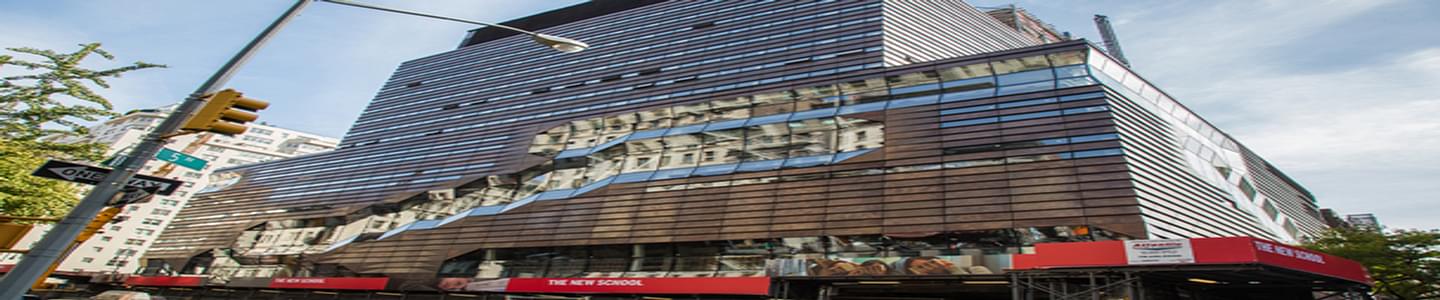
Located in Manhattan’s Greenwich Village and East Village, The New School’s programme sits at the intersection of theory and practice. The Media Studies BA/BS curriculum balances conceptual frameworks with technical skill-building—from broadcast journalism to digital storytelling. Ideal for applicants who want to work in media organizations, streaming platforms, content production houses, or media research roles post-graduation. The urban campus provides direct access to New York’s major media, publishing, and production hubs.
- 120-credit degree with 30 credits in Media Studies core and concentration courses; hands-on production labs and editing suites.
- F-1 visa holders eligible for 12 months of Optional Practical Training post-graduation in the US media sector.
- Urban campus in Greenwich Village offers internship access to major media companies, streaming services, and production firms within walking distance.
Current Admission Status
Applications for the Fall 2026 intake are Open. International student deadline for priority consideration: 01 April 2026.
Indian applicants should plan for 4-6 weeks to obtain official English test scores (TOEFL iBT or IELTS) and compile transcripts. Rolling admissions continue through August 2026.
All INR conversions in the article use a conversion rate of USD 1 = INR 95.18 as of June 2026.
Also Check: The New School Admission Requirements
The New School Bachelor Media Studies Fees and Living Costs 2026
The annual tuition for undergraduate programmes at The New School ranges from USD 35,000 to USD 45,000 per year based on degree type and school. Media Studies is offered through the Schools of Public Engagement and typically aligns with general undergraduate tuition.
| Fee Component | USD (Annual) | INR (Annual) |
|---|---|---|
| Tuition (estimated range) | USD 35,000–USD 45,000 | INR 33.33 Lakhs–INR 42.86 Lakhs |
| Housing on-campus (optional) | USD 12,000–USD 18,000 | INR 11.42 Lakhs–INR 17.13 Lakhs |
| Books and supplies | USD 1,200 | INR 1.14 Lakhs |
| Personal expenses | USD 2,000 | INR 1.90 Lakhs |
| Estimated annual total (with campus housing) | USD 50,200–USD 66,200 | INR 47.79 Lakhs–INR 63.04 Lakhs |
Note:
- Tuition covers full-time course load and access to studio facilities including digital media labs and editing suites.
- Housing costs reflect on-campus dormitories; off-campus shared apartments in outer boroughs run USD 1,000 to USD 1,800 monthly.
- The New School offers merit-based scholarships averaging USD 6,000 to USD 12,000 annually for entering undergraduate students.
- International students must demonstrate financial capacity; expect total cost of attendance between USD 50,000 and USD 66,000 annually.
Cost of Living in New York for Bachelor Media Studies Students
| Expense Category | Monthly USD | Monthly INR |
|---|---|---|
| Shared apartment rent (Queens/Brooklyn) | USD 1,200–USD 1,800 | INR 1.14 Lakhs–INR 1.71 Lakhs |
| Groceries and food | USD 500–USD 650 | INR 47,590–INR 61,867 |
| Public transportation (unlimited MetroCard) | USD 133 | INR 12,677 |
| Phone and utilities (shared) | USD 80–USD 120 | INR 7,614–INR 11,422 |
| Total monthly (off-campus) | USD 1,913–USD 2,703 | INR 1.82 Lakhs–INR 2.57 Lakhs |
Key insight: New York’s cost of living for students averages USD 2,500 to USD 5,500 monthly depending on neighbourhood and lifestyle. Media Studies students benefit from the city’s cultural institutions, free galleries, and subsidized student entertainment events that reduce discretionary spending.
Also Check: Cost of Living in the United States for Students
The New School Bachelor Media Studies Admission 2026
The New School admits transfer and adult undergraduate students through a rolling admissions cycle. For Fall 2026, the priority deadline is 01 April; final deadline is 01 August. Most applicants are expected to complete high school or hold a secondary school certificate; some programmes accept adult learners without prior undergraduate credit.
Academic Eligibility
| Requirement | Details |
|---|---|
| Secondary school transcript | Official transcripts in English (or certified translation). Minimum grades in English, social studies, and electives reviewed; no minimum GPA enforced (holistic review). |
| English language proficiency | TOEFL iBT, IELTS Academic, PTE Academic, Duolingo English Test, or Cambridge C1/C2 accepted. |
| Standardized tests (SAT/ACT) | Optional for Fall 2026 undergraduate admission. GRE not required for undergraduates. |
| Extracurriculars or portfolio | Media production portfolio, journalism samples, or creative work strongly encouraged for competitive standing. |
| Application fee | USD 65 non-refundable (waived for Common App fee-waiver requests). |
The New School (QS ranking 801–850 globally) does not publish a subject-specific ranking for Media Studies. The university’s overall standing reflects its strength in design, social research, and liberal arts, with particular recognition in the arts and humanities disciplines through Parsons School of Design.
English Language Proficiency (ELP) Requirements
International undergraduate applicants must demonstrate English proficiency via one of these standardized tests.
| Test | Minimum Overall Score | Minimum Component Scores |
|---|---|---|
| TOEFL iBT | 80 | Reading 18, Listening 17, Speaking 18, Writing 17 |
| IELTS Academic | 6.5 | All bands minimum 6.0 |
| PTE Academic | 59 | Communicative Skills 59+ |
| Duolingo English Test | 105 | No component minimums |
| Cambridge C1/C2 | A (C1) or higher | N/A |
Note:
- TOEFL iBT (80+) is the most widely recognized in India; preparation takes 6-10 weeks for strong speakers of English.
- IELTS Academic is accepted; Indian test-takers often find the speaking module more aligned with accent-neutral assessment.
- Duolingo English Test offers a lower cost option (USD 49) but requires a score of 105, which is competitive even for advanced speakers.
- If you score below the minimums, The New School may require an English language support course before enrolling (1-2 semesters).
Honest take: TOEFL scores of 80-85 are highly competitive but achievable for Indian applicants with 6-8 weeks of focused preparation. Scores below 78 may trigger conditional admission with mandatory ESL coursework.
The New School Bachelor Media Studies Application 2026
Applicants submit a Common Application form or The New School’s direct application portal. Rolling admissions begin 01 September 2025 for Fall 2026 entry.
| Deadline | Intake | Status |
|---|---|---|
| 01 April 2026 | Fall 2026 | Priority deadline for merit scholarships |
| 01 June 2026 | Fall 2026 | Standard deadline |
| 01 August 2026 | Fall 2026 | Final deadline (rolling admissions continue) |
Note:
- Decisions released 2-4 weeks after application completeness; rolling admissions mean earlier submissions receive faster replies.
- Application requires secondary transcripts, one letter of recommendation, and a 250-word personal statement on media interests.
- International students must upload proof of financial support (bank statement or sponsor letter); typical threshold is USD 60,000 total funds.
Application tip: Submit by 01 April to qualify for merit-based scholarships; the priority deadline ensures review for institutional grants that reduce cost of attendance by USD 5,000 to USD 12,000 annually.
The New School Bachelor Media Studies Scholarships 2026
The New School awards merit-based scholarships to entering undergraduates based on academic strength and demonstrated need. Media Studies applicants with strong transcripts and creative portfolios are competitive for institutional aid.
| Scholarship Type | Annual Award | Awards/Eligibility |
|---|---|---|
| Merit Scholarship (Entering Freshmen) | USD 6,000–USD 12,000 | Based on high school GPA and test scores; 30-40% of cohort |
| Portfolio-Based Award (Creative) | USD 3,000–USD 8,000 | For demonstrated media production or journalism work |
| Need-Based Grant | USD 2,000–USD 15,000 | Based on FAFSA (international students limited eligibility) |
| International Student Scholarship | USD 2,000–USD 5,000 | Varies; apply through admission office |
A typical Media Studies student with above-average academics and a media portfolio might receive USD 8,000 to USD 10,000 (INR 76.14 Lakhs to INR 95.18 Lakhs) annually, reducing the cost of attendance from USD 50,000-66,000 to approximately USD 40,000-58,000 (INR 38.07 Lakhs to INR 55.25 Lakhs) per year.
Scholarship reality: Merit aid is awarded upon admission; international students are not eligible for federal loans or Stafford aid, so institutional scholarships are the primary cost-reduction lever. Budget-conscious applicants should expect out-of-pocket costs even with aid.
Check Out: The New School Rankings
The New School Bachelor Media Studies Salary 2026
Bachelor’s degree holders in Media Studies from The New School enter careers in broadcast journalism, content production, digital marketing, and media management. Entry-level salaries vary by role and employer; mid-market and streaming platforms typically offer higher pay than nonprofit media.
| Career Path | Typical Entry Salary (USD) | Entry Salary (INR) | Industry |
|---|---|---|---|
| Content Coordinator/Producer | USD 35,000–USD 45,000 | INR 33.33 Lakhs–INR 42.86 Lakhs | Streaming platforms, broadcast |
| Junior Journalist/Reporter | USD 30,000–USD 40,000 | INR 28.55 Lakhs–INR 38.07 Lakhs | News media, digital publishing |
| Digital Marketing Specialist | USD 40,000–USD 52,000 | INR 38.07 Lakhs–INR 49.49 Lakhs | Tech, media, corporate |
| Post-Production Technician | USD 32,000–USD 42,000 | INR 30.46 Lakhs–INR 40.00 Lakhs | Production houses, film studios |
Source: US Bureau of Labor Statistics (Media and Communication Occupations) 2025; The New School alumni employment tracking.
Take-home pay varies by state income tax, Federal withholding, and Social Security deductions; approximately 25-30% of gross salary is withheld. Use the IRS tax calculator at irs.gov/taxes to estimate net income for your target state.
ROI reality: A Media Studies graduate earning USD 40,000 gross annually takes home approximately USD 28,000-30,000 (INR 26.66 Lakhs–INR 28.55 Lakhs) after federal and state taxes. Total cost of degree (four years) is USD 180,000-264,000; recoupment takes 6-9 years, but career trajectory in media leadership commands USD 60,000-100,000 (INR 57.11 Lakhs–INR 95.18 Lakhs) by year 10.
United States Visa Bachelor Media Studies
International students pursuing an undergraduate degree in the United States must obtain an F-1 student visa. The visa process typically takes 1-2 months from application to approval. F-1 holders are authorized for on-campus work up to 20 hours weekly during the semester.
- Optional Practical Training (OPT): Post-graduation work permit allowing 12 months of employment in your field. For STEM-designated programmes, 12 months is standard (Media Studies is not STEM); apply while still enrolled.
- H-1B Visa eligibility: After OPT, you can transition to H-1B skilled-worker visa (employers sponsor). Salary threshold is USD 60,000 minimum. H-1B lottery is competitive; employers typically sponsor senior-level or specialized roles.
- Path to permanent residency: From H-1B, you can apply for employment-based green card (typically 6-10 years). Requires employer sponsorship and prevailing wage certification.
- Dependents: F-1 visa allows spouse and unmarried children under 21 to accompany you on F-2 dependent visas. They cannot work but can study with permission.
Visa reality: F-1 visa is reliable for full-time study; OPT is guaranteed for 12 months post-graduation. However, H-1B transition is uncertain due to visa cap and lottery system. Plan for either return to home country or alternative work visa (L-1, O-1) if H-1B is not available.
Also Check: F-1 Student Visa Requirements for the USA
The New School Bachelor Media Studies Ranking 2026
The New School does not hold a subject-specific QS, THE, FT, or ARWU ranking for Media Studies or journalism disciplines. The university’s overall QS ranking of 801–850 (2026) reflects its strengths in design, social research, and the liberal arts, with particular recognition through Parsons School of Design’s influence on arts and design education globally.
Bachelor Media Studies graduates are recognized within New York’s media industry networks. The programme’s strength lies in practicum-based learning and direct access to internship sites rather than formal subject rankings.
Honest take: Media Studies at The New School is practicum-focused and location-advantaged rather than ranked as an elite research programme. Employers value hands-on experience and New York professional networks over subject rankings for entry-level media roles.
Choosing The New School’s Bachelor Media Studies means investing in a hands-on degree rooted in New York City’s media ecosystem. The 120-credit curriculum emphasizes both critical media theory and practical production skills. Tuition runs USD 35,000-USD 45,000 annually (INR 33.33 Lakhs–INR 42.86 Lakhs), and with merit aid, realistic out-of-pocket cost is USD 25,000-USD 40,000 per year (INR 23.81 Lakhs–INR 38.07 Lakhs). The urban location is the programme’s signature advantage: internships, work-study jobs, and professional networking happen within walking distance. Post-graduation, OPT work authorization guarantees 12 months in the US; career progression to H-1B and green card is employer-dependent but achievable in media organizations and tech companies. For Indian applicants, TOEFL 80+ and a media portfolio are your keys to competitive admission and scholarship consideration.
FAQs
Ques. What is the difference between The New School’s BA and BS in Media Studies?
Ans. The BA emphasizes media history, criticism, and theory; the BS includes more production technology and hands-on work with cameras, editing software, and digital tools. Both require 120 credits with 30 in Media Studies. Most students choose based on career interest: BA for journalism/criticism, BS for production/technical roles. You declare your track at enrollment.
Ques. Can international students work off-campus during their studies?
Ans. F-1 visa holders are limited to on-campus work (libraries, dining, administration, media labs) up to 20 hours weekly during the semester. Off-campus work requires special authorization via Curricular Practical Training (CPT), available for internships that are part of your degree curriculum. Check with the Office of International Students before accepting off-campus positions.
Ques. Is GRE required for The New School’s undergraduate Media Studies programme?
Ans. No, GRE is not required for undergraduate admission. SAT or ACT is optional for Fall 2026 admissions. The New School uses holistic review, considering transcripts, essays, letters of recommendation, and any media portfolio you submit. Standardized test scores help but are not mandatory.
Ques. What is the on-campus housing situation for international students?
Ans. The New School guarantees housing for first-year undergraduate students but not for subsequent years. About 45 percent of undergraduates live on-campus. Cost runs USD 12,000 to USD 18,000 annually (INR 11.42 Lakhs–INR 17.13 Lakhs). Many students move to shared apartments in Brooklyn or Queens in years two and three to reduce costs. The Housing Office helps with connections to landlords and roommates.
Ques. What happens after the 12-month OPT work permit expires?
Ans. You must either secure an H-1B visa sponsorship from your employer, return to your home country, or pursue alternative visa options (L-1 for intra-company transfer, O-1 for individuals with extraordinary ability, or Canadian/Australian work visas). H-1B sponsorship is not guaranteed and depends on employer willingness and visa cap lottery. Plan proactively during your final semester of study.
Tuition Fees
| Year | 1st Year Fees |
|---|---|
| Tuition Fees | $55588 |
Previous Year Tuition Fees
| Year | 1st Year Fees |
|---|---|
| 2023 | $51900 |
Scholarship Grants & Financial Aids
| Name | Scholarship Per Student | Level of Study | Type | |
|---|---|---|---|---|
| Ritchie-Jennings Memorial Scholarship Program | Scholarship per student$ 10,000/Yr$10,000 | Level Of StudyBachelor | TypeMerit-Based | |
| Axol Science Scholarship | Scholarship per student$ 2,000/Yr$2,000 | Level Of StudyBachelor | TypeCompany-Sponsored | |
| VueVille Future Technology Scholarship | Scholarship per student$ 1,000/Yr$1,000 | Level Of StudyBachelor | TypeMerit-Based | |
| R&D Systems Scholarship | Scholarship per student$ 1,500/Yr$1,500 | Level Of StudyBachelor | TypeMerit-Based | |
| BL Mandhana Scholarships | Scholarship per student$ 10,000/Yr$10,000 | Level Of StudyBachelor | TypeMerit-Based | |
| Go Clean Scholarship | Scholarship per student$ 3,500/Yr$3,500 | Level Of StudyBachelor | TypeMerit-Based |





Comments