Bachelor of Science [B.S] (Agricultural Science, Communication & Leadership)
Field of Study:
$28,052 /Yr
Bachelor of Science in Agricultural Science, Communication & Leadership at University of Idaho
The University of Idaho, nestled in the picturesque farming heartland of the American Pacific Northwest, offers a rigorous Bachelor of Science in Agricultural Science, Communication & Leadership. This four-year undergraduate degree combines agricultural expertise with communication skills and leadership development, preparing graduates for careers in agribusiness, farm management, agricultural extension, and agricultural policy. For Indian students, the program offers an exceptional opportunity to earn a degree from a globally recognized land-grant institution while accessing post-graduation work authorizations and potential pathways to permanent residency in the United States.
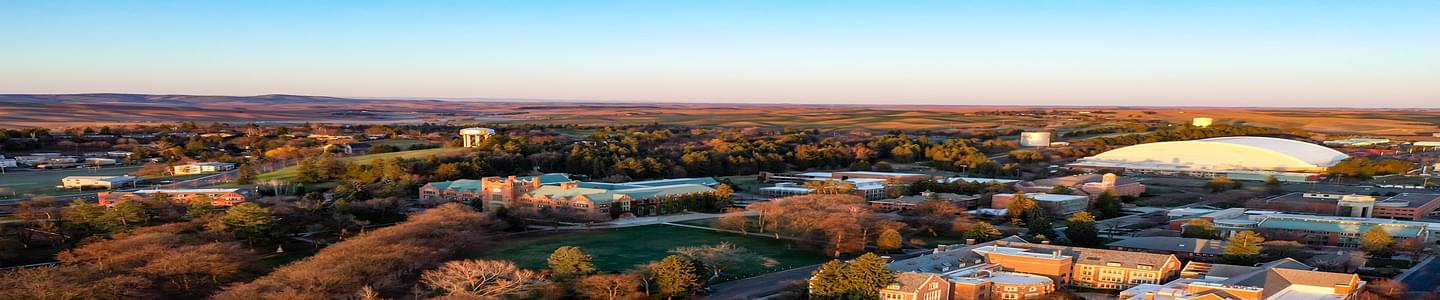
Located in Moscow, Idaho, the university sits in the Palouse region, one of North America’s most productive agricultural zones. This geographic advantage provides direct access to working farms, agricultural research facilities, and industry partnerships. International students comprise approximately 15% of the university’s total enrollment, creating a vibrant multicultural community. The program emphasizes hands-on learning through field research, internships, and capstone projects that develop both technical competence and professional communication abilities.
Indian students pursuing agricultural sciences often face limited opportunities domestically to combine technical agricultural knowledge with formal business communication training. University of Idaho’s integrated approach addresses this gap, positioning graduates for leadership roles in multinational agribusinesses, agricultural cooperatives, government agencies, and academic institutions across India and globally. The degree carries particular weight in India’s agricultural sector, where American agricultural credentials signal advanced training in sustainable farming practices, agribusiness management, and evidence-based agricultural extension.
Agricultural Science Program Structure and Curriculum
The BS in Agricultural Science, Communication & Leadership is structured around four core pillars: agricultural science fundamentals, business and communication training, leadership development, and practical field experience. The curriculum spans 120 credit hours distributed across four academic years. Core courses cover plant science, soil science, crop management, animal science, and agricultural economics. Students complete 45 credit hours of general education requirements aligned with university standards, 30 credit hours of agricultural science specialization courses, and 25 credit hours of communication and leadership electives.
The communication component sets this program apart from traditional agricultural science degrees. Students develop skills in agricultural journalism, extension education, agribusiness communication, and public speaking. Leadership courses focus on organizational management, team dynamics, stakeholder engagement, and agricultural policy communication. The capstone course in the final year requires students to design and present a comprehensive agricultural project addressing real-world industry challenges, combining technical knowledge with professional communication.
| Curriculum Component | Credit Hours | Key Courses |
|---|---|---|
| General Education | 45 | English, Math, Sciences, Social Sciences, Humanities |
| Agricultural Science Core | 30 | Soil Science, Plant Science, Crop Management, Ag Economics |
| Communication & Leadership | 25 | Agricultural Journalism, Extension Education, Ag Leadership |
| Electives & Experiential | 20 | Internships, Field Research, Capstone Project |
Internship opportunities are embedded throughout the program. Many students complete summer internships at agricultural corporations, farm operations, seed companies, or extension services. These internships provide income (US$1,200-2,000 per month), practical experience, and often lead to post-graduation employment offers. For Indian students, internships in the United States during academic breaks contribute to work experience that enhances visa eligibility and post-graduation employment prospects.
Admission Requirements for Agricultural Science Program
University of Idaho admits students on a rolling basis, meaning earlier applications receive more favorable consideration for both admission and scholarship funding. For the BS in Agricultural Science, the university requires a completed application including official high school transcripts or equivalent qualifications, standardized test scores, and an application fee (currently US$70). Indian students must meet the same admission standards as domestic applicants, with no separate quotas or reduced requirements. Competitiveness for admission has increased over recent years, with average incoming freshman test scores around 1050-1200 on the SAT or 21-27 on the ACT.
For international students, English language proficiency is mandatory. The university requires either a Test of English as a Foreign Language (TOEFL) score (minimum 71 on the Internet-based test), International English Language Testing System (IELTS) score (minimum 6.0), or English Proficiency Exam (EPT) score. Many Indian students meet this requirement through their school-based English curricula plus IELTS/TOEFL preparation. The program does not require specific agricultural background, though high school coursework in biology, chemistry, and mathematics strengthens competitiveness.
The university evaluates applications holistically. While test scores carry weight, the admissions committee also considers essay quality, leadership activities, agricultural or science-related community service, and demonstrated interest in the field. Indian students with agricultural background, such as family farming experience or participation in agricultural clubs, often present compelling narratives that differentiate their applications. Letters of recommendation from science or agriculture teachers are highly valued.
| Requirement | Minimum Standard | Indian Student Notes |
|---|---|---|
| High School Transcript | 3.0 GPA (4.0 scale) | 12th standard CBSE/ICSE marks transcript required with certified English translation |
| SAT Score | 1050 (competitive) | SAT or equivalent available in India; many Indian students score 1100-1400 |
| TOEFL/IELTS | 71 (TOEFL iBT) / 6.0 (IELTS) | IELTS widely available in India; average Indian applicant scores 6.5-7.5 |
| Application Fee | US$70 | Approximately ?6,668 at current FX rate (95.26 INR/USD) |
Application Process and Deadlines for Agricultural Science Admission
University of Idaho operates on a rolling admission cycle with four primary application deadlines. Fall semester admission (August start) has early priority deadlines in January, February, and March, with final deadlines through July. Spring semester admission (January start) is available with November and December deadlines. International students are strongly advised to apply by March for fall enrollment to maximize time for visa processing, which typically requires 2-4 months after I-20 issuance. The earlier deadline also provides better scholarship access, as University of Idaho allocates most merit-based funding based on application date.
The application process is entirely online through the university’s admissions portal. Indian students must first create an account, then upload scanned copies of their high school transcripts, standardized test scores, English language proficiency test results, and a brief essay (500-750 words) responding to a university-specific prompt, typically asking why the student chose University of Idaho and their agricultural career aspirations. Official documents can be uploaded directly, or transcripts can be sent via the testing agencies (SAT, TOEFL, etc.).
After admission, the next critical step for Indian students is securing the I-20 certificate (Certificate of Eligibility for Non-Immigrant Student Status). Once admitted, the university’s international student services office issues the I-20, which is required to apply for the F-1 visa at the US Embassy or Consulate in New Delhi, Mumbai, Chennai, or Bangalore. This process typically takes 2-3 weeks after submitting financial documentation proving ability to pay the full cost of attendance (tuition plus living expenses). Many Indian families submit bank statements, sponsor letters, and investment documents to demonstrate financial capacity.
| Deadline | Semester | Recommended for Indians |
|---|---|---|
| January 31 | Fall (August) | Highest priority, all scholarships available |
| February 28 | Fall (August) | Good scholarship access, visa processing time sufficient |
| March 31 | Fall (August) | Last priority deadline, limited scholarships |
| November 15 | Spring (January) | Less common, but possible for gap-year candidates |
Required documents for I-20 issuance include proof of financial support (bank statements showing minimum US$50,000-60,000 for first year), completed international student financial form, and copies of the admission letter. International student services provides a checklist of all requirements; missing documents delay I-20 issuance and subsequent visa processing. Indian students should begin gathering financial documents immediately upon admission notification.
Tuition Fees and Cost of Attendance for Agricultural Science
University of Idaho’s tuition structure distinguishes between resident and non-resident (international) students. For the 2024-2025 academic year, international undergraduate students in the College of Agricultural and Life Sciences pay annual tuition of approximately US$18,500 plus mandatory fees totaling US$2,400, bringing the total annual direct educational cost to approximately US$20,900. When converted to Indian rupees at the current FX rate of 95.26, this equals approximately ?1,99,183 per year. This cost structure has remained relatively stable over the past three years, with increases averaging 2-3% annually, making it highly predictable for financial planning.
Beyond tuition and fees, living expenses in Moscow, Idaho are moderate compared to major US cities. On-campus housing (mandatory for freshmen) costs approximately US$5,500-6,500 per academic year for shared dormitory residence. Meal plans run US$3,000-3,500 annually. Off-campus housing, available for upper-class students, typically costs US$4,000-6,000 per year for shared apartments. Books and course materials average US$1,200-1,500 annually. Personal expenses, transportation, and miscellaneous costs typically total US$2,000-3,000 per year. Thus, the total estimated annual cost of attendance for an international student approximates US$32,000-35,000, equivalent to approximately ?3,05,000-3,33,000.
| Expense Category | Annual Cost (USD) | Annual Cost (INR) |
|---|---|---|
| Tuition & Fees | US$20,900 | ?1,99,183 |
| On-Campus Housing | US$6,000 | ?57,156 |
| Meal Plan | US$3,200 | ?30,483 |
| Books & Supplies | US$1,300 | ?12,384 |
| Personal & Misc. | US$2,500 | ?23,815 |
| Total Annual Cost | US$33,900 | ?3,23,021 |
For a four-year degree, the total cost of attendance approximates US$135,600 (?12,92,084), a significant but manageable investment when amortized over professional earnings in India or the United States. Many Indian families leverage education loans from Indian banks or international lenders to finance this expense, with loan approval often contingent on demonstrating sufficient family collateral and repayment capacity.
Scholarships and Financial Aid for Agricultural Science Students
University of Idaho offers merit-based scholarships ranging from US$5,000 to US$20,000 annually for international undergraduate students demonstrating strong academic credentials and standardized test scores. The Vandal Excellence Award, available to top-tier applicants (SAT 1350+, GPA 3.8+), provides US$15,000-20,000 annually, reducing the net cost to approximately US$14,000-18,000 per year. International students are automatically considered for merit scholarships upon admission; no separate application is required. However, merit scholarship allocation prioritizes applications received by early February, meaning students applying by January 31 deadlines receive more favorable evaluation.
Need-based financial aid is limited for international students at University of Idaho. The university commits limited institutional aid to international students; most support comes through merit-based scholarships. However, students can explore external funding sources through Indian organizations, educational trusts, and government schemes. Scholarships from organizations like the Indian Council for Cultural Relations (ICCR), though competitive, provide significant support to selected recipients. Many Indian students also access education loans from ICICI Bank, HDFC Bank, or Axis Bank, which offer international education loans with interest rates between 8-12% annually and tenure up to 15 years.
On-campus work opportunities provide additional financial support. F-1 student visa regulations permit up to 20 hours per week of on-campus employment during academic terms, earning approximately US$14-16 per hour. Many students work in library services, dining halls, research assistantships, or teaching assistantships, generating US$2,800-4,000 per academic year. During summer and winter breaks, students may work full-time (40 hours per week), potentially earning US$5,000-8,000 during a three-month break. This income significantly offsets living expenses and makes the degree financially accessible.
Student Life and Campus Experience at University of Idaho
The University of Idaho campus in Moscow spans 800 acres with state-of-the-art facilities including modern science laboratories, the Vandal Center for student activities, athletic facilities, and residential halls. The student body comprises approximately 11,500 undergraduates and 2,500 graduate students. International students, numbering around 1,800, hail from 75 countries, creating a genuinely multicultural community. The university actively welcomes international students through orientation programs, international student clubs, and mentorship initiatives. The International Student Services office provides comprehensive support including visa advising, immigration compliance, cultural adaptation, and emergency assistance.
Student organizations number over 300, covering academic disciplines, sports, cultural heritage, religious practice, and special interests. Indian students often form or join Indian student associations, cultural clubs, and Hindu/Sikh religious groups that meet regularly for cultural events and festival celebrations. The university’s calendar includes Diwali celebrations, Holi festivities, and other cultural observances. These communities provide crucial social support, combating homesickness and helping students navigate the cultural adjustment of studying abroad. Many Indian students report that campus cultural life significantly enhanced their overall experience and sense of belonging.
Housing on campus is guaranteed for freshmen; upper-class students have priority access. Moscow offers a safe, close-knit community environment distinct from large urban campuses. The cost of living is substantially lower than in major US cities, with student apartments available in town for US$400-600 per month. The university provides free shuttle bus services within Moscow. Weather features cold, snowy winters (minimum temperatures around -15°C) and mild summers (maximum around 30°C), requiring appropriate clothing but creating beautiful seasonal landscapes. Indian students often mention the close-knit agricultural community, outdoor recreational opportunities, and slower pace of life as appealing aspects of the Moscow experience.
Graduate Outcomes and Career Placement for Agricultural Science Graduates
University of Idaho’s BS in Agricultural Science, Communication & Leadership graduates achieve strong employment outcomes. Approximately 92% of graduates secure employment or pursue further education within six months of graduation. Career destinations include agricultural corporations (Monsanto, Corteva, BASF), farming operations and agricultural cooperatives, government agencies (USDA, State Department of Agriculture), agricultural extension services, agricultural consulting firms, food processing companies, and nonprofit organizations focused on sustainable agriculture. The median starting salary for agricultural science graduates is approximately US$38,000-45,000 annually, with significant potential for advancement to management positions paying US$60,000-80,000+ within five years.
For Indian students, career outcomes are particularly favorable in multinational agricultural companies with Indian operations. Many graduates secure positions with multinational agribusinesses such as Syngenta, Bayer, BASF, and John Deere India, leveraging both their American credentials and cultural understanding of Indian agricultural markets. The degree also positions graduates well for roles in agricultural development organizations, government agricultural research institutions (ICAR), and academic positions. Additionally, the Optional Practical Training (OPT) program permits post-graduation work authorization in the United States for up to 12 months, with STEM field extension eligibility potentially extending this to 24-36 months (agricultural science qualifies as a STEM field under current US regulations).
Graduate education is another common pathway. Approximately 35% of graduates pursue master’s degrees in agricultural economics, agricultural business, soil science, plant breeding, or related fields at universities worldwide. University of Idaho’s graduate programs in agriculture are respected, and many undergraduates transition directly to graduate study at the same institution or move to other research institutions. The capstone project and undergraduate research experience prepare students well for graduate-level research, a significant advantage when applying to competitive graduate programs.
Visa and Immigration Pathway for Indian Students
Indian students pursuing the BS in Agricultural Science at University of Idaho do so under the F-1 student visa category. The F-1 visa permits international students to enroll full-time in a Sevis-certified educational institution, live in the United States for the duration of their studies, and work on campus. The visa is valid for the duration of status (D/S), meaning the visa document itself may expire but the student remains lawfully authorized to study as long as maintaining valid enrollment and visa compliance. After admission and I-20 issuance, students apply for the F-1 visa at US embassies or consulates in India, a process requiring an interview, financial documentation, and demonstration of ties to India.
F-1 regulations permit students to work up to 20 hours per week on campus during academic terms and full-time during official university breaks. This provides both financial support and valuable work experience. Post-graduation, students become eligible for Optional Practical Training (OPT), which grants 12 months of work authorization in the United States without requiring sponsorship. Since agricultural science qualifies as a STEM field, graduates are eligible for an additional 24-month STEM extension, totaling up to 36 months of post-graduation work authorization. This extended OPT period enables graduates to gain US work experience and potentially transition to H-1B visa sponsorship by employers.
The H-1B visa is a specialty occupation visa requiring employer sponsorship. Agricultural science graduates with US work experience are eligible for H-1B sponsorship by employers seeking their specific expertise. The H-1B visa is valid for three years initially, renewable for another three years, totaling up to six years. After accumulating sufficient experience, graduates can pursue permanent residency (Green Card) through employment-based sponsorship, typically via EB-2 (professional with advanced degree) or EB-3 (skilled worker) categories. The employment-based green card process takes 2-5 years depending on country of origin and priority date. Upon obtaining permanent residency, individuals gain unrestricted right to live and work in the United States, with pathways to eventual citizenship after five years (or three if married to a US citizen).
| Visa/Status Type | Duration | Work Authorization |
|---|---|---|
| F-1 Student Visa | Duration of Studies (4 years) | On-campus only, 20 hrs/week during term |
| OPT (12 months) | 12 months post-graduation | Full-time off-campus work authorized |
| STEM Extension (24 months) | 24 additional months | Full-time work with same/related employer |
| H-1B Visa | 3 years (renewable to 6 years max) | Full-time work with sponsoring employer |
| Green Card (EB-2/EB-3) | Permanent | Unrestricted work authorization |
Comparison with Similar Agricultural Science Programs
The University of Idaho’s BS in Agricultural Science, Communication & Leadership compares favorably with peer land-grant institutions offering similar programs. Key competitors include Colorado State University, Oregon State University, Iowa State University, and Washington State University. University of Idaho’s tuition at approximately US$20,900 annually ranks as one of the most affordable among these peer institutions, while maintaining comparable academic rigor and employment outcomes. Colorado State’s agricultural program costs approximately US$24,000 annually (tuition + fees), while Oregon State and Washington State approximate US$22,000-23,000. Iowa State, despite being in the heart of the corn belt, costs US$20,500, nearly identical to University of Idaho.
| Institution | Annual Tuition (USD) | Program Strength | Intl. Scholarships |
|---|---|---|---|
| University of Idaho | US$20,900 | Strong in leadership focus | US$5,000-20,000/yr |
| Iowa State University | US$20,500 | Premier research reputation | US$8,000-18,000/yr |
| Oregon State University | US$22,500 | Strong in sustainable agriculture | US$5,000-15,000/yr |
| Colorado State University | US$24,000 | Strong research and industry links | US$6,000-18,000/yr |
| Washington State University | US$23,000 | Strong in agribusiness | US$5,000-20,000/yr |
University of Idaho’s distinctive strength lies in its explicit integration of communication and leadership training into the agricultural curriculum. While competitor institutions offer these elements as complementary courses, University of Idaho has embedded them as core program components, differentiating graduates. Employment data shows University of Idaho graduates achieve similar placement rates (90-95%) and salary ranges (US$37,000-45,000) as peers. The university’s regional advantage in the Palouse agricultural area, combined with lower cost, makes it particularly attractive for Indian students prioritizing affordability without sacrificing academic quality or employment prospects.
Frequently Asked Questions About Agricultural Science at University of Idaho
1. What is the F-1 visa timeline, and how long does it take to obtain one for studying at University of Idaho?
The complete F-1 visa process typically takes 3-4 months from admission to arrival. Timeline: (1) admission notification (5-10 days), (2) submission of financial documents to obtain I-20 (5-15 days), (3) I-20 issuance (5-10 days), (4) visa appointment scheduling at US Embassy/Consulate in India (2-6 weeks, depending on season), (5) visa interview and decision (1-3 days to 2 weeks). To study in August, apply by February at the latest. Summer (May-June) sees higher visa interview wait times, potentially causing delays. Many Indian students apply by January to avoid rush-season delays. After visa approval, arrange travel, requiring 2-3 weeks for flight booking and final preparations.
2. Can Indian students work in the United States while studying, and how much can they earn?
Yes. F-1 students work on campus up to 20 hours per week during academic terms (fall and spring semesters), earning approximately US$14-16 per hour, totaling US$280-320 per week or US$2,800-3,200 per 10-week semester. During official university breaks (winter break, spring break, summer break), students work full-time (40 hours per week) for approximately 4 weeks per break, earning US$2,240-2,560 per break. Annually, combined work income approximates US$3,500-5,000, significantly offsetting living expenses. After graduation, OPT work authorization permits full-time employment at any employer, earning US$45,000-55,000+ annually. This makes the degree financially much more accessible than it appears on paper.
3. What are the key differences between University of Idaho and Iowa State University for agricultural students?
Iowa State, located in Ames, Iowa (the heart of the US corn belt), has a larger agricultural program with more research opportunities and stronger industry connections in commodity agriculture (corn, soybeans). Iowa State’s cost approximates US$20,500, almost identical to University of Idaho. However, Iowa State’s enrollment exceeds 36,000, making it significantly larger and more competitive for admission. University of Idaho, with approximately 14,000 students, offers a more intimate learning environment and smaller class sizes. University of Idaho’s unique emphasis on communication and leadership training, its lower cost of living in Moscow, and its smaller cohort size make it preferred by students prioritizing personalized attention. Iowa State excels for students focused purely on commodity crop research; University of Idaho for those seeking broader agribusiness and communication skills.
4. Is agricultural science considered a STEM field for OPT purposes, and how long can Indian graduates work in the United States after graduation?
Yes, agricultural science is classified as a STEM field (Science, Technology, Engineering, Mathematics) by the US Department of Homeland Security. This classification provides significant advantages for post-graduation work authorization. Graduates are eligible for 12 months of standard OPT (Optional Practical Training) plus an additional 24 months of STEM extension, totaling 36 months of work authorization. This extended period is unavailable to non-STEM graduates, who receive only 12 months. The 36-month window enables Indian graduates to gain substantial US work experience, secure H-1B sponsorship, and potentially transition to permanent residency through employment-based sponsorship. This extended authorization significantly increases the value of a University of Idaho agricultural science degree for career development in the United States.
5. What is the cost of living in Moscow, Idaho, and how affordable is it compared to other US university towns?
Moscow is one of the most affordable college towns in the United States. Monthly living expenses (excluding tuition) approximate US$1,500-1,800 for students living on campus or in shared apartments. This breaks down to approximately US$600-800 monthly for housing (shared apartment or dorm), US$250-350 for meals (beyond campus meal plan), US$100-150 for utilities, US$50-100 for transportation, and US$200-300 for entertainment and miscellaneous expenses. Annually, total living expenses approximate US$14,000-16,000, significantly lower than major cities. Comparable university towns like Boulder (Colorado), Eugene (Oregon), or Ithaca (New York) average US$1,800-2,200 monthly. Moscow’s cost advantage, combined with strong on-campus employment opportunities, makes the University of Idaho experience exceptionally affordable for Indian students. Many students work part-time jobs and contribute toward tuition and living costs without financial hardship.
Tuition Fees
| Year | 1st Year Fees |
|---|---|
| Tuition Fees | $28052 |
Previous Year Tuition Fees
| Year | 1st Year Fees |
|---|---|
| 2023 | $28052 |
Important Dates
Scholarship Grants & Financial Aids
| Name | Scholarship Per Student | Level of Study | Type | |
|---|---|---|---|---|
| Ritchie-Jennings Memorial Scholarship Program | Scholarship per student$ 10,000/Yr$10,000 | Level Of StudyBachelor | TypeMerit-Based | |

| Axol Science Scholarship | Scholarship per student$ 2,000/Yr$2,000 | Level Of StudyBachelor | TypeCompany-Sponsored | |
| VueVille Future Technology Scholarship | Scholarship per student$ 1,000/Yr$1,000 | Level Of StudyBachelor | TypeMerit-Based | |

| R&D Systems Scholarship | Scholarship per student$ 1,500/Yr$1,500 | Level Of StudyBachelor | TypeMerit-Based | |

| BL Mandhana Scholarships | Scholarship per student$ 10,000/Yr$10,000 | Level Of StudyBachelor | TypeMerit-Based | |
| Go Clean Scholarship | Scholarship per student$ 3,500/Yr$3,500 | Level Of StudyBachelor | TypeMerit-Based |


Comments