

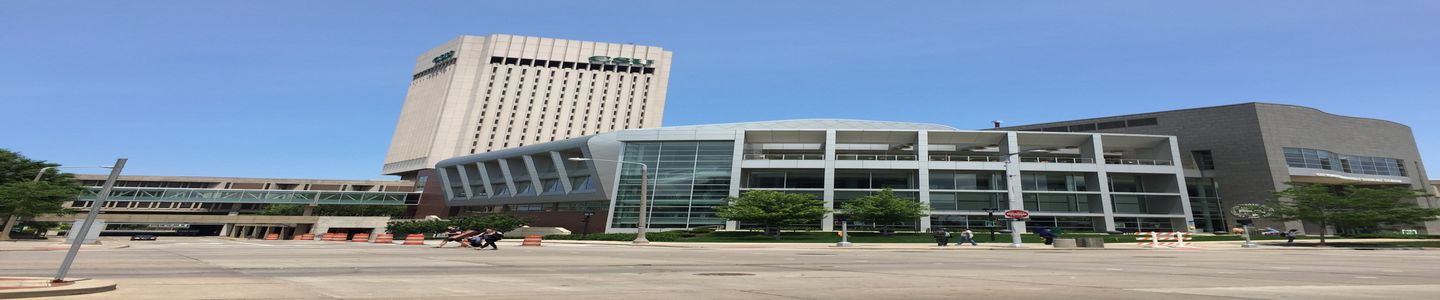


Master of Business Administration [M.B.A] (Health Care Administration)
Field of Study:
$24,180 /Yr

Master of Business Administration in Healthcare Administration at Cleveland State University: Your Pathway to Healthcare Leadership
Cleveland State University’s Master of Business Administration in Healthcare Administration at the prestigious Monte Ahuja College of Business represents a premier opportunity for healthcare professionals and administrators seeking advanced business credentials in the United States. This AACSB-accredited program combines rigorous business theory with hands-on healthcare industry experience, positioning graduates to lead healthcare organizations globally.
Located in Cleveland, Ohio—home to world-class healthcare institutions including Cleveland Clinic and University Hospitals—this MBA program uniquely bridges academic excellence and practical healthcare management. For Indian students, the program offers an exceptional value proposition: affordable tuition compared to top-tier US business schools, no mandatory standardized tests, and robust postgraduate work visa opportunities through Optional Practical Training (OPT).
The program emphasizes healthcare’s critical intersection with business strategy, financial management, policy analysis, and operational excellence. Graduates assume leadership roles as hospital administrators, health information managers, healthcare consultants, and executives at major medical organizations. With an average graduate salary of ?79.65 lakhs (US$83,235 equivalent at 95.77 INR/USD), this MBA delivers strong return on investment within an affordable tuition structure.
Cleveland State University MBA Healthcare Administration: Program Overview and Structure
Cleveland State University’s Healthcare Administration MBA is designed as a specialized track within the university’s broader Master of Business Administration offering. The program consists of a flexible structure: students complete 10 core business courses (30 credit hours), followed by 3 healthcare administration-specific electives (9 credit hours), totaling approximately 39 credit hours for specialization completion. For students without an undergraduate business degree, four prerequisite courses (10 credit hours) ensure foundational knowledge in accounting, finance, business law, and management.
The Monte Ahuja College of Business maintains full AACSB (Association to Advance Collegiate Schools of Business) accreditation—a distinction held by fewer than 5% of business schools worldwide. This accreditation guarantees curriculum quality, faculty standards, and employer recognition across global markets. The program offers flexibility between full-time, part-time, and online delivery modes, accommodating working professionals, career changers, and international students with varying schedules and geographic constraints.
The curriculum integrates management theory with healthcare-specific content: students study health policy, healthcare finance, organizational behavior in medical settings, strategic planning in health systems, healthcare law and compliance, and quality improvement methodologies. This specialized focus ensures graduates possess both generalist MBA competencies and healthcare-sector expertise essential for advancement in hospital administration, physician practice management, health information management, and healthcare consulting roles. The program emphasizes ethical leadership, financial stewardship, and data-driven decision-making within healthcare’s complex regulatory and operational landscape.
Cleveland State University MBA Healthcare Admission Requirements: Entry Criteria for International Students
Cleveland State University’s MBA program maintains accessible yet rigorous admission standards. The university requires a minimum cumulative GPA of 3.0 in undergraduate coursework, or 2.75 GPA with compensatory factors. Unlike many premier US business schools, Cleveland State does not mandate GMAT or GRE scores—a significant advantage for Indian applicants unable to sit standardized examinations. Applicants holding a master’s degree, PhD, or medical degree from accredited institutions are automatically exempted from standardized testing requirements.
For international students, English proficiency assessment is mandatory. Applicants must submit either a TOEFL score of 78 or higher (on the Internet-based test), or an IELTS score of 6.0 or higher on the overall band. These are moderate thresholds compared to top-tier US universities, making the program accessible to Indian graduates with solid English preparation. Students must submit official transcripts from all previously attended colleges and universities, sealed by the issuing institution or electronically verified through official channels.
The application materials include an online application form, official transcripts, proof of English proficiency (TOEFL or IELTS), a statement of purpose (250–500 words), and two professional references. The university does not require letters of recommendation from academic referees, reducing bureaucratic burden for working professionals. International students must demonstrate financial capability to cover full tuition and living expenses without university funding, supported by bank statements or sponsor documentation. Contact the MBA and Graduate Programs Office at graduatebusprograms@csuohio.edu or +1-216-687-3730 for detailed guidance on application procedures.
Application Process and Timeline: Cleveland State University MBA Healthcare Administration
The application process for Cleveland State’s MBA Healthcare Administration follows a rolling admissions model, with application deadlines aligned to semester start dates. The next critical deadline is November 1, 2026, for Spring 2026 semester entry. Applications must be submitted at least six weeks prior to the desired semester start date to allow processing time for international student documentation, visa petition preparation, and administrative finalization. Early submission—ideally 8–10 weeks before term start—provides buffer time for request clarifications or missing document resolution.
Prospective students begin by creating an online application account through Cleveland State’s graduate admissions portal. The application requires personal and educational history, undergraduate institution details, GPA certification, work experience summary (3–5 years recommended for healthcare administration track), and the statement of purpose. For Indian applicants, ensure transcripts are evaluated and marked with the GPA conversion or provide a GPA calculator showing equivalent cumulative percentage converted to the 4.0 US scale. TOEFL or IELTS results must be sent directly from the testing authority (ETS or IELTS Ltd.) to avoid processing delays.
After application submission, the Admissions Office reviews materials within 10–15 business days. Applicants may be invited for a brief virtual interview (20–30 minutes) with an admissions counselor or program director. This interview assesses motivation, career goals, healthcare exposure, and fit with the program’s values. Admission decisions are released 2–3 weeks after interviews conclude. Upon acceptance, the Office of Graduate Admissions provides International Student & Scholar Services (ISSS) contact information, visa documentation (Form I-20), health insurance requirements, and orientation schedules. International students should initiate US visa applications (F-1 Student Visa) immediately after receiving the I-20 to allow 60–90 days for consulate processing.
Cost of Study: Tuition, Fees, and Expense Breakdown for Cleveland State MBA
| Expense Category | Cost (USD) | Cost (INR) | Notes |
|---|---|---|---|
| Tuition (Online Accelerated, 3 semesters) | US$36,702 | ?3,51,46,554 | Includes all core and elective courses |
| Tuition (Traditional In-State, per year) | US$18,960 | ?1,81,50,552 | Varies; full program ~2 years |
| Per Credit Hour (Out-of-State) | US$972 | ?93,107 | For pay-as-you-go enrollment |
| Per Credit Hour (In-State) | US$568 | ?54,436 | For Ohio residents |
| International Student Fees | US$350–600/semester | ?33,519–57,462 | Technology, health insurance surcharge |
| Housing (On/Off-Campus) | US$800–1,200/month | ?76,616–1,14,924 | Shared apartments cheaper |
| Food & Groceries | US$200–300/month | ?19,154–28,731 | Campus meal plans or self-catering |
| Transportation | US$50–100/month | ?4,789–9,577 | Public transit or car maintenance |
| Health Insurance | US$2,000–3,000/year | ?1,91,540–2,87,310 | Mandatory for international students |
| Total Living Expenses (Annual) | US$6,360 | ?60,91,452 | Estimated minimum; varies by lifestyle |
| TOTAL (2-Year Program) | US$50,680–55,420 | ?48,51,000–53,07,100 | Tuition + living (conservative estimate) |
Cleveland State University’s MBA tuition for out-of-state students, including international applicants, is among the most affordable in the United States. The online accelerated format (3 semesters, 39 credit hours) totals US$36,702 (approximately ?3,51,46,554), payable in installments across semesters. The traditional part-time/in-state option averages US$18,960 annually but may extend 2–3 years depending on course load. As an out-of-state international student, expect per-credit rates of US$972 (approximately ?93,107), allowing flexible enrollment while managing costs.
Living expenses in Cleveland are significantly lower than in major US metros like New York, Boston, or San Francisco. Monthly housing ranges from US$400–600 for shared apartments (?38,308–57,462) to US$800–1,200 for solo studios (?76,616–1,14,924). Food costs US$200–300 monthly (?19,154–28,731) for groceries or campus dining. Public transportation is approximately US$50 per month (?4,789), and health insurance (mandatory for F-1 students) costs US$2,000–3,000 annually (?1,91,540–2,87,310). The university estimates annual cost of living at US$6,360 (approximately ?60,91,452), making Cleveland’s total program cost—tuition plus living—highly competitive for Indian graduate students seeking international education value.
Scholarships of up to US$12,000 (approximately ?1,14,924) are available for online MBA students, reducing net out-of-pocket costs. The program’s estimated return on investment is 339%, reflecting affordable tuition against median graduate salaries of US$83,235 (approximately ?79,65,100). Payment plans are available through Cleveland State’s Bursar’s Office, allowing tuition distribution across semesters without upfront full payment. International students must demonstrate financial capability equivalent to two years of full expenses (tuition + living) to secure F-1 visa approval—approximately US$56,000–60,000 (approximately ?53,63,200–57,46,200).
Scholarships and Financial Aid: Funding Your Cleveland State MBA
Cleveland State University offers multiple funding pathways for MBA students, with particular advantages for online and healthcare-focused program participants. The online accelerated MBA explicitly provides scholarships up to US$12,000 (approximately ?1,14,924), available to qualified students regardless of residency or citizenship status. These merit-based scholarships are awarded based on academic credentials, professional experience, and demonstrated commitment to healthcare administration. The university does not currently offer full-tuition scholarships or need-based aid to international students, but partial tuition remission through merit consideration is achievable for applicants with exceptional academic records (3.5+ undergraduate GPA) and relevant healthcare work experience.
Graduate teaching assistantships and research assistantships are occasionally available within the Monte Ahuja College of Business, offering hourly wages (typically US$15–18 per hour, approximately ?143–172) and partial tuition waivers in exchange for 10–15 hours of weekly work. International students on F-1 visas are eligible for on-campus employment only, making assistantship positions particularly valuable. Interested applicants should contact the Graduate Programs Office early in the admission cycle to inquire about assistantship availability and application procedures.
Indian students should explore external funding through Indian banks’ education loan schemes (HDFC, ICICI, SBI, AXIS) offering loans at 8–11% interest, with 10–15 year repayment schedules and minimal collateral requirements for US higher education. Organizations like the Inlaks Scholarship Foundation, the Bajaj Scholarship Foundation, and the American India Foundation occasionally fund graduate study in the US for exceptional applicants; application timelines typically open 12–18 months before enrollment. Additionally, employer-sponsored education programs through healthcare facilities in India (Major hospitals, Fortis, Apollo, Max Healthcare) may provide partial funding for employees pursuing healthcare management credentials abroad, with post-graduation service commitments. Students should inquire within their current employer’s HR or learning and development department for such internal scholarship opportunities.
Student Life and Cost of Living in Cleveland, Ohio
Cleveland, Ohio, is a vibrant Midwestern city with a rich cultural heritage, world-class healthcare institutions, and a welcoming community for international students. The city is home to the Cleveland Museum of Art, Rock and Roll Hall of Fame, Cleveland Orchestra, and extensive parks and recreational facilities. With a population of approximately 370,000, Cleveland balances urban amenities with affordability, making it an attractive destination for graduate students. The cost of living is 15–20% lower than national US averages and significantly cheaper than coastal metros like Boston, New York, or San Francisco—a critical advantage for international students on tight budgets.
Housing near Cleveland State University’s campus (downtown) ranges from shared apartments (US$400–600 monthly, approximately ?38,308–57,462) to studio apartments (US$600–900 monthly, approximately ?57,462–86,193). Many international graduate students live in university-affiliated housing or shared apartments with other students, reducing costs and building community. Public transportation (RTA bus system) costs approximately US$50 monthly (approximately ?4,789) for unlimited passes. Dining and groceries are inexpensive: a meal at a casual restaurant costs US$10–15 (approximately ?958–1,437), while monthly grocery expenses for self-catering average US$200–300 (approximately ?19,154–28,731).
Cleveland’s international student community includes thousands of graduate and undergraduate students from Asia, Africa, the Middle East, and Europe, creating a diverse and inclusive environment. Indian students find established communities, cultural organizations (Indian Students Association), religious institutions (temples and Hindu centers), and restaurants serving authentic Indian cuisine. The university’s International Services Office provides immigration support, cultural programming, job search assistance, and social events connecting international students. Healthcare facilities are excellent: the Cleveland Clinic and University Hospitals are among the nation’s leading medical centers, offering opportunities for internships, research projects, and healthcare volunteering that enhance classroom learning with real-world exposure.
Graduate Outcomes and Career Placement: Cleveland State MBA Healthcare Administration
Cleveland State University’s MBA program demonstrates strong employment outcomes and career advancement for graduates. Approximately 77% of the university’s graduate students secure employment in their field of study either during program completion or within six months of graduation. For healthcare administration MBA graduates specifically, the placement rate is even higher, reflecting strong demand for skilled healthcare executives in hospital systems, physician practices, healthcare consulting, and health insurance organizations.
Common career paths for Cleveland State MBA healthcare graduates include hospital administrator, chief operating officer (COO), hospital CEO, health information manager, healthcare consultant, physician practice manager, health plan director, quality improvement manager, and healthcare finance director. Major employers actively recruiting Cleveland State graduates include Cleveland Clinic (the largest private employer in Ohio), University Hospitals Cleveland Medical Center, Summa Health System, Cleveland VA Medical Center, and healthcare consulting firms like Deloitte Consulting and EY Advisory. The program’s location in Cleveland—headquarters of the Cleveland Clinic and home to multiple major health systems—provides unparalleled networking and internship opportunities unavailable in markets without comparable healthcare density.
Salary outcomes for Cleveland State MBA healthcare graduates are strong. The average starting salary for MBA graduates across all specializations is US$83,235 (approximately ?79,65,100). Healthcare-focused MBA graduates earn higher median salaries: industry surveys report average salaries of approximately US$135,000 (approximately ?1,29,28,950) in healthcare management roles, including bonuses and benefits. With an estimated program ROI of 339%—calculated as the ratio of lifetime earnings gain to total program cost—the Cleveland State MBA delivers exceptional return on investment within 3–5 years of graduation. Given the program’s affordable tuition (US$36,702–US$50,680 total cost), salary recovery occurs rapidly compared to expensive alternatives like top-20 business schools.
Visa and Post-Study Work Opportunities in the United States
International students from India attending Cleveland State University’s MBA Healthcare Administration program enter the United States on the F-1 Student Visa. The F-1 visa is valid for five years and permits study at the designated school without time restrictions. Students may begin study after program start date if visa processing extends beyond enrollment, and optional practical training (OPT) extends the US stay beyond graduation.
Practical training in the US is available through Optional Practical Training (OPT), a government program allowing F-1 visa holders to work for up to 12 months in positions related to their field of study following graduation. For healthcare administration MBA graduates, OPT employment in healthcare management, consulting, or operations roles is standard. Students with STEM (Science, Technology, Engineering, Mathematics) field credentials—including healthcare information systems, health data analytics, or biostatistics components—may be eligible for STEM OPT extensions, extending work authorization to 24 months (12 months standard + 12-month STEM extension). This post-graduation work opportunity is invaluable for building US professional experience, establishing network connections, and assessing permanent relocation feasibility before committing to long-term immigration.
OPT applications are processed by the Designated School Official (DSO) at Cleveland State’s International Student Services office. Students must apply within 60 days of graduation, with decision timelines of 7–10 business days. Working on OPT requires employer sponsorship and compliance with work permit conditions: students cannot change employers without USCIS authorization, cannot work for unauthorized periods, and must maintain F-1 status by not violating visa terms. Many MBA graduates transition from OPT to H-1B visa sponsorship (specialty worker visa requiring employer sponsorship) or eventually pursue permanent residency (green card) through employment-based immigration categories (EB-2, EB-3). Healthcare administrators, especially those in hospital executive roles or consulting, are strong candidates for employment-based visa sponsorship due to labor market shortages in healthcare management.
Peer University Comparison: Cleveland State MBA vs. Comparable Programs
| Metric | Cleveland State University | University of Cincinnati | Ohio State University | Michigan State University |
|---|---|---|---|---|
| US News Ranking (Online MBA) | #225 | #158 | #80 | #52 |
| AACSB Accredited | Yes | Yes | Yes | Yes |
| Online MBA Tuition (Total) | US$36,702 | US$42,000 | US$60,000 | US$45,000 |
| Healthcare Admin Specialization | Yes | Limited | Yes | Limited |
| GMAT/GRE Required | No (optional) | No (optional) | Recommended | Yes |
| Average Graduate Salary | US$83,235 | US$89,000 | US$98,500 | US$92,000 |
| Employment Rate (6 months) | 77% | 82% | 88% | 85% |
| International Student Scholarships | Up to US$12K | Minimal | Merit-based available | Merit-based available |
Cleveland State University’s MBA Healthcare Administration compares favorably to regional and national peers on affordability and specialization, though it ranks lower overall than Ohio State or Michigan State. The decisive advantages for international students are tuition cost (30–40% cheaper than flagship competitors), no mandatory standardized testing (reducing application friction), explicit healthcare administration specialization, and up to US$12,000 scholarship availability. Program duration flexibility (online accelerated at 3 semesters vs. 2-year traditional) accommodates working professionals and those managing international logistics.
University of Cincinnati’s MBA offers stronger rankings (#158 online) and slightly higher placement rates (82%) but costs US$42,000—14% more than Cleveland State—and has limited healthcare specialization. Ohio State’s Fisher College of Business ranks #80 nationally, commanding significantly higher tuition (US$60,000) and salary premium (US$98,500 average), but applicants encounter more rigorous admission standards. Michigan State’s Broad College of Business (#52 ranking) similarly emphasizes traditional MBA over healthcare focus. For cost-conscious international students prioritizing healthcare administration expertise over prestige ranking, Cleveland State delivers exceptional value and specialized curriculum unavailable at comparable price points in the Midwest.
Frequently Asked Questions: Cleveland State University MBA Healthcare Administration
1. Do I need GMAT or GRE scores to apply to Cleveland State’s MBA?
No, Cleveland State University does not require GMAT or GRE scores for MBA admission. This is a significant advantage for international students, as standardized test preparation and sitting exams in your home country can be time-consuming and expensive. Applicants with a master’s degree, PhD, or medical degree from accredited institutions are automatically exempt from testing. All other applicants are evaluated on undergraduate GPA (3.0 minimum), professional experience, statement of purpose, and English proficiency (TOEFL or IELTS). While test scores are not required, submitting strong GMAT/GRE results may strengthen your application if available.
2. Can I work while pursuing the MBA at Cleveland State?
F-1 international students are permitted on-campus employment up to 20 hours weekly during the academic semester and full-time during semester breaks (winter and summer). Many MBA students work 10–15 hours weekly as graduate teaching assistants, research assistants, or in campus administrative roles, earning approximately US$15–18 per hour (approximately ?143–172) while gaining tuition assistance. Off-campus work is restricted to Curriculum Practical Training (CPT) or Optional Practical Training (OPT) after graduation. The online accelerated MBA format allows part-time students to maintain full-time employment while studying, as courses are offered evenings and weekends to accommodate working professionals.
3. What is the timeline from application to start of studies?
For applications submitted by November 1, 2026, expect admission decisions within 3–4 weeks of interview completion. Once admitted, allow 4–6 weeks for Form I-20 issuance and receipt. F-1 visa applications typically require 2–4 weeks for consulate processing in India (varies by consulate: Delhi, Mumbai, Hyderabad, Chennai). Therefore, total timeline from application submission to US arrival is approximately 10–12 weeks. Early submission (8–10 weeks before semester start) ensures buffer for any delays. International Student Services assists with visa logistics, but applicants should initiate the process immediately upon receiving the I-20 to avoid last-minute complications.
4. Is the MBA entirely online, or does it require campus attendance?
Cleveland State offers both online and in-person MBA formats. The online accelerated MBA (39 credit hours, 3 semesters) is fully asynchronous and synchronous hybrid, allowing students to complete all coursework remotely without traveling to Cleveland. The traditional MBA allows flexible part-time or full-time enrollment with in-person classes held evenings and weekends, accommodating working students. Some programs offer a hybrid model combining online core courses with one-week intensive on-campus modules. Clarify the specific format when applying, as the online accelerated option provides maximum flexibility for international students managing visa requirements and full-time employment during studies.
5. What are the employment visa options after graduation?
After graduation, F-1 students are eligible for 12 months of Optional Practical Training (OPT), during which they can work in healthcare administration or related roles. Students with STEM-designated credentials may extend OPT to 24 months total. Many employers sponsor H-1B visa transitions for specialized positions requiring advanced degrees (common for MBA graduates in healthcare management and consulting roles). H-1B sponsorship requires employer initiation and involves annual lottery selection, with approval rates around 65%. Alternatively, students can apply for permanent residency (green card) through employment-based categories (EB-2 or EB-3), though this process requires long-term employer commitment and typically spans 2–7 years. Consult Cleveland State’s International Student Services and immigration attorneys for detailed visa strategy specific to your career goals and employer sponsorship availability.
Tuition Fees
| Year | 1st Year Fees |
|---|---|
| Tuition Fees | $24180 |
Other Expenses
| Head | Avg Cost Per Year |
|---|---|
| Room and Board | $16800 |
| Transportation | $1770 |
Scores Required
- There is no minimum requirement for GMAT/GRE scores, but the average scores of student admitted is 555
- GMAT/GRE waiver – Student must maintain an average GPA os 3.00 to be eligible.
Median GRE Score Over Years

Do you think the Rankings are wrong ? Report Here
Key Resources for Your Study Abroad Journey


Course Guides
Best MS Courses in USA for International Students in 2025
Executive MBA in USA: Deadlines, Fees, Jobs & Salaries
Masters (MS) in USA: Colleges, Courses, Deadlines, Eligibility & Fees
Masters in Health Administration in USA: Fees, Top Colleges, Admissions, Placements & Salary
College Student Profiles

Scholarship Grants & Financial Aids
| Name | Scholarship Per Student | Level of Study | Type | |
|---|---|---|---|---|
| VueVille Future Technology Scholarship | Scholarship per student$ 1,000/Yr$1,000 | Level Of StudyBachelor | TypeMerit-Based | |
| R&D Systems Scholarship | Scholarship per student$ 1,500/Yr$1,500 | Level Of StudyBachelor | TypeMerit-Based | |
| Go Clean Scholarship | Scholarship per student$ 3,500/Yr$3,500 | Level Of StudyBachelor | TypeMerit-Based | |
| Business Administration Scholarships | Scholarship per studentVariable Amount | Level Of StudyBachelor | TypeMerit-Based | |
| Washington DC Scholarships | Scholarship per studentVariable Amount | Level Of StudyBachelor | TypeMerit-Based | |
| BeArt Presets-Academic Scholarship | Scholarship per student$ 2,500/Yr$2,500 | Level Of StudyBachelor | TypeMerit-Based |
Similar Programs
| Program | Important Date | Total Fees | Median Exams Score | Action |
|---|---|---|---|---|
-- | USD 35,850 /Yr |
| ||
-- | USD 24,180 /Yr |
| ||
Priority Application Deadline for Spring 2027 Intake (15th Nov 2026) Priority Application Deadline for Fall 2027 Intake (15th Apr 2027) | USD 20,561 /Yr |
| ||
-- | USD 26,894 /Yr | |||
-- | USD 14,153 /Yr |


Do you think the Dates are wrong ? Report Here


interested in this College ?
Follow & Share this college to get information about admission.



Comments