



Master of Engineering [MEng] (Engineering Physics)
Field of Study:
$38,498 /Yr

Master of Engineering [MEng] Engineering Physics at McMaster University: Complete Guide for Indian Students
McMaster University’s Master of Engineering (MEng) in Engineering Physics is a 18-month, course-based graduate program designed to prepare engineers for advanced roles in semiconductor technology, photonics, power systems, and quantum engineering. Located in Hamilton, Ontario, McMaster combines rigorous technical training with industry-focused problem-based learning that attracts international students seeking practical engineering expertise.
For Indian students, this program represents a direct pathway to Canadian permanent residence through post-graduation work permits. The program accepts Fall 2027 cohorts with a January 31, 2027 application deadline. Annual tuition for international students is approximately CAD 14,500 (INR 1,016,740), plus living expenses of CAD 17,160–23,040 annually (INR 12.03–16.16 Lakhs).
McMaster Engineering ranks in the top 200 globally (QS World Rankings) and consistently places graduates in roles at Hydro-Québec, SNC-Lavalin, Ericsson, and major technology firms. This guide covers admission requirements, financial planning, campus life, and career prospects specifically for Indian applicants.
Program Overview & McMaster University Engineering Physics Specializations
The MEng in Engineering Physics is a professional master’s degree focusing on the physics and engineering of advanced technologies including electromagnetics, power systems, control systems, and quantum engineering. Unlike thesis-based research programs, this is a course-centric 18-month pathway with a mandatory capstone design project that mirrors real-world industrial challenges.
McMaster’s engineering faculty operates under the McMaster Problem-Based Learning (PBL) model, which means your courses emphasize hands-on problem-solving over lecture-based theory. You will work through engineering scenarios in groups, mirror the collaborative environment of engineering firms, and develop both technical depth and soft skills valued by employers.
Core specialization areas in Engineering Physics include:
- Electromagnetics & Power Systems: High-voltage transmission, renewable energy integration, smart grids, power electronics
- Control Systems & Automation: Industrial automation, robotics control, digital signal processing, feedback systems
- Photonics & Quantum Engineering: Fiber optics, laser systems, semiconductor photonics, quantum device design
- Energy Systems: Battery technology, fuel cells, thermal management, energy conversion
The program structure consists of 5 courses per term over three terms (Fall 2027 start through Spring 2028 finish), plus a capstone design project in the final term. No thesis is required, making this ideal for students prioritizing workforce entry over academic research.
Intake occurs once annually in September; the next cohort begins Fall 2027 (application deadline January 31, 2027). International students including those from India are welcome in the Fall intake.
Admission Requirements & Application Deadlines for McMaster Engineering Physics
To qualify for McMaster’s MEng Engineering Physics program, you must hold a Bachelor of Science Honours degree in Physics, Engineering Physics, Electrical Engineering, Mechanical Engineering, or a closely related discipline, awarded with a minimum of 80% overall GPA (equivalent to 8.5/12.0 CGPA on the McMaster scale). The competitive range sits at 88% for recent cohorts, so strong undergraduate performance significantly strengthens your candidacy.
English language proficiency is mandatory for international applicants. McMaster accepts IELTS (band 6.5 minimum, with no component below 5.5), TOEFL iBT (92 or higher), Duolingo English Test (120), or PTE Academic (65). For Indian students, IELTS and TOEFL are most widely recognized; ensure you register at least 4–6 weeks before the deadline to account for score delivery time.
Application deadlines for 2027 intake:
| Intake | Deadline | Target Start |
|---|---|---|
| Fall 2027 (International Only) | January 31, 2027 | September 2027 |
Supervisor confirmation is NOT mandatory for MEng programs (unlike thesis-based Masters), so you do not need to contact faculty before submitting your application. However, specialization preference will be assigned during admission or in consultation with the graduate coordinator post-acceptance.
Required documents: official undergraduate transcripts, two letters of recommendation (academic or professional), a statement of purpose (500 words), GRE scores are optional but recommended if your undergraduate GPA is below 82%, and valid passport. The application fee is CAD 150 (INR 10,518).
Admission decisions typically arrive 8–12 weeks after the deadline. Applicants are notified via email by late March 2027, giving you time to arrange visas, accommodation, and financial documentation before Fall 2027 arrival.
Cost of Education: Tuition, Fees & Financial Planning for Indian Students
The Master of Engineering in Engineering Physics costs international students approximately CAD 14,500–15,500 per academic year in direct tuition and mandatory fees. For an 18-month program, total tuition expenditure is CAD 21,750–23,250 (INR 1,524,990–1,628,460).
| Cost Category | Per Year (CAD) | 18-Month Total (CAD) | 18-Month Total (INR) |
|---|---|---|---|
| Tuition | 14,500 | 21,750 | 1,524,990 |
| Ancillary Fees (student services, library, health) | 2,100 | 3,150 | 220,878 |
| Health Insurance (mandatory international) | 950 | 1,425 | 99,921 |
| Books & Course Materials | 1,500 | 2,250 | 157,770 |
| Total Direct Costs | 19,050 | 28,575 | 2,003,559 |
Living costs in Hamilton range from CAD 17,160–23,040 annually (INR 12.03–16.16 Lakhs for 12 months). Shared student housing costs CAD 700–900/month (INR 49,084–63,108/month); groceries and utilities add CAD 500–700/month (INR 35,060–49,084/month). For your 18-month study period, budget total living expenses of CAD 25,740–34,560 (INR 18.04–24.23 Lakhs).
Combined 18-month cost: CAD 54,315–63,135 (INR 38,071–44,294 Lakhs or roughly 38–44 Lakhs INR). This assumes no scholarship support; scholarships can reduce this by 20–30%.
Work eligibility while studying: International students are permitted to work up to 20 hours per week during academic terms, and full-time during official breaks (Christmas and Summer). On-campus positions (library, IT, teaching assistant) typically pay CAD 16–18/hour (INR 1,122–1,263/hour). Part-time work can offset 15–25% of living costs.
Currency note: Exchange rates fluctuate; the CAD 1 = INR 70.12 rate used above is current as of June 2026. Always verify with your bank for real-time rates when making payments.
Scholarships & Financial Aid for International Engineering Students at McMaster
McMaster offers multiple scholarship pathways for international graduate students in engineering. The main awards are competitive and merit-based, with typical annual values ranging from CAD 5,000–21,000 (INR 350,600–1,430,940).
Primary Scholarships for International Graduate Students:
- McMaster International Excellence Award: CAD 15,000–21,000/year (INR 1,051,800–1,430,940) for incoming students with strong academic records. Available to new international MEng students in Engineering.
- International Distinction Award: CAD 10,000–15,000/year (INR 701,200–1,051,800) for competitive GPA (85+%) and demonstrated leadership or research experience.
- Faculty of Engineering Graduate Scholarships: CAD 5,000–10,000/year (INR 350,600–701,200) for continuing graduate students based on academic performance in first semester.
- Research Assistantship (RA) Positions: Variable stipend (typically CAD 8,000–12,000 per term for 8–12 hours/week work) available through faculty research labs. Many MEng students secure RA roles in capstone project supervision.
Competition is selective; 15–25% of international MEng cohorts receive the top-tier Excellence Award. Application is automatic with your graduate admission; no separate scholarship form is required. Your statement of purpose and letters of recommendation influence scholarship decisions.
Post-graduation funding: McMaster alumni in engineering roles are eligible for employer-based scholarships and bursaries from professional engineering bodies (Professional Engineers Ontario, Engineers Canada) if you secure Canadian employment post-degree.
Estimated total scholarship coverage for a strong candidate: CAD 21,000/year for 18 months = CAD 31,500 (INR 2,208,780), reducing net cost from CAD 54,315 to approximately CAD 22,815 (INR 1,598,538) for the entire program.
Intake Processes, Key Deadlines & Application Timeline for McMaster MEng
The Master of Engineering in Engineering Physics follows a structured annual intake cycle with one application window per year for international students.
| Milestone | Target Date | Action |
|---|---|---|
| Prepare Application | July–December 2026 | Compile transcripts, arrange letters of rec, study for IELTS/TOEFL, write SOP |
| English Test Exam | October–December 2026 | Take IELTS/TOEFL (allow 4–6 weeks for score delivery) |
| Submit Application | January 31, 2027 (11:59 PM EST) | Online application portal closes; late submissions not accepted |
| Admission Review Period | February–March 2027 | Admissions committee reviews all applications; decisions issued in batches |
| Offer Acceptance Deadline | April 15, 2027 | Accepted students confirm enrollment and deposit (typically CAD 500–1,000) |
| Visa Application | April–June 2027 | Obtain study permit application letter, submit to Indian IRCC office; allow 4–8 weeks processing |
| Arrival in Canada | August–September 2027 | Arrive in Hamilton, attend international student orientation; classes begin early September |
Key tip: Apply by December 31, 2026 to maximize your chances of early admission and scholarship consideration; January applications face stiffer competition for top awards.
Visa processing from India typically takes 6–8 weeks via the Indian IRCC office in New Delhi. Start your visa application immediately after acceptance. You must hold a valid study permit upon arrival in Canada.
McMaster University Campus Life, Student Experience & Hamilton, Ontario Living
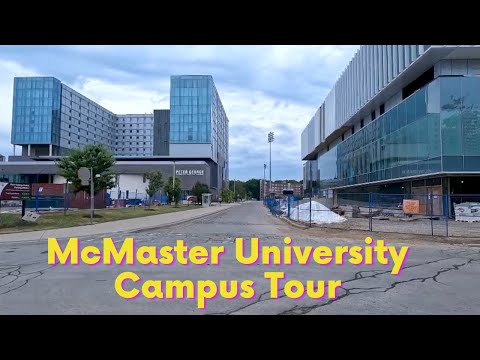
McMaster University occupies a 300-acre campus in Hamilton, Ontario (45 kilometers southwest of Toronto), positioned on the Niagara Peninsula in southern Ontario. The campus blends modern research facilities with green spaces, proximity to the Great Lakes, and a vibrant graduate student community of over 6,000 students from 90+ countries.
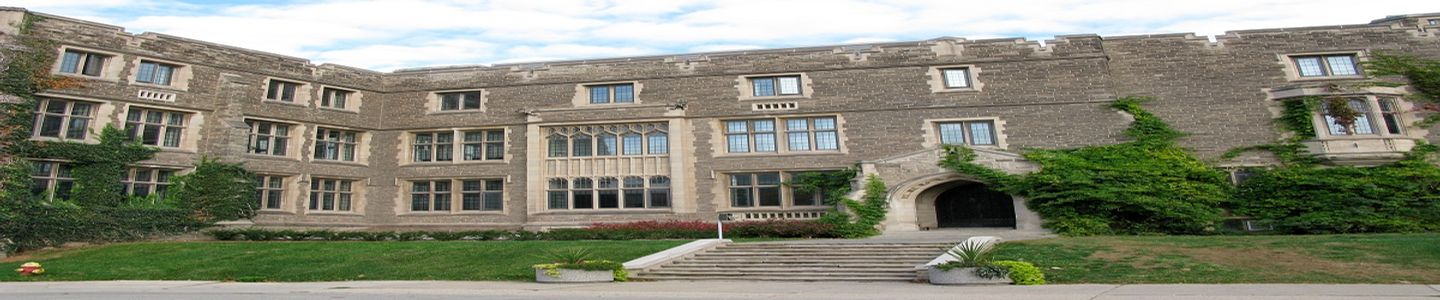
The Faculty of Engineering at McMaster is housed in the renovated T. H. Bayer Engineering Building, featuring modern labs for power systems, photonics, electromagnetics, and control systems research. Capstone design spaces provide hands-on prototyping areas used by MEng students for their final projects. The university library system includes 2+ million physical volumes plus extensive digital access to engineering journals and databases (IEEE Xplore, ASME Digital Collection, etc.).
For international students, McMaster operates an International Services office providing visa support, housing assistance, cultural integration programs, and emergency services. Graduate student housing is available on-campus at reduced cost (CAD 700–800/month for single rooms), though most MEng students prefer shared apartments off-campus in neighborhoods like Westdale or Downtown Hamilton, which offer lower rent (CAD 600–750/month) and proximity to restaurants, transit, and social venues.
Hamilton, Ontario is Canada’s fifth-largest metropolitan area with a population of 750,000+. The city offers affordable living relative to Toronto or Vancouver, diverse dining (South Asian restaurants, Canadian chains), recreational facilities (parks, hockey leagues, climbing gyms), and excellent public transit via the Hamilton Street Railway. A study-period activity for many Indian students involves weekend trips to Toronto (45 min by GO Transit) for cultural events, Diwali celebrations, and Indian grocery shopping at Gerrard Square.
Graduate student life at McMaster: Organized social events, engineering hackathons, research colloquia, and faculty mixers occur throughout the semester. The McMaster Indian Student Association hosts monthly dinners, Holi celebrations, and cricket tournaments; membership is free and connects you with 300+ fellow Indian students across all programs. The cost of living (CAD 1,430–1,920/month or INR 100,260–134,630/month) makes Hamilton an attractive choice compared to Toronto (CAD 2,200+) or Vancouver (CAD 2,000+).
Post-Graduation Visa Options & Canadian Residency Pathways for Indian Graduates
Upon completing your Master of Engineering degree in Engineering Physics, you are eligible for a Canadian Post-Graduation Work Permit (PGWP), allowing you to work in Canada for a duration equal to your study period. Since your MEng is an 18-month program, you receive an 18-month open PGWP valid anywhere in Canada, in any role (not restricted to your field of study or a single employer).
PGWP Pathway: Submit your application within 180 days of your official program completion date. You do not need a job offer to apply. Processing time is typically 4–8 weeks; your PGWP is issued as a document stamp in your passport.
Express Entry to Permanent Residence: After securing employment in Canada (typical roles: Design Engineer, Power Systems Engineer, Control Systems Engineer at 50,000–80,000 CAD entry salary), you become eligible to apply for permanent residence through Canada’s Express Entry system. The Comprehensive Ranking System (CRS) considers your:
- Age (higher score for ages 20–29): advantage for Indian students, typically age 25–30 post-MEng
- Language proficiency (IELTS or TOEFL scores already in your file)
- Canadian work experience (1–2 years accumulation from your PGWP period)
- Educational credential (Master’s degree boosts score significantly)
A typical Canadian MEng graduate with 1 year of experience in Canada achieves a CRS score of 450–500, qualifying for Permanent Resident selection draws occurring every 2 weeks (2025–2026 cut-off scores average 450–480). Timeline from graduation to permanent residence: 2–3 years.
Provincial Nominee Program (PNP): Ontario offers an engineering-specific stream (Ontario Immigrant Nominee Program, OINP) targeting skilled trades and technical roles. As an MEng Engineering Physics graduate, you are eligible for the OINP Tech Draws (no provincial processing fee), often with lower CRS thresholds than federal Express Entry.
Alternative pathway—Employer Sponsorship: Some employers (especially those in renewable energy, aerospace, automotive) sponsor skilled international employees for permanent residence directly; this accelerates your timeline by 12–18 months.
Health and Safety in Canada: Canada offers universal public healthcare (covered after 3–6 months of residency). As an international student, you are covered under McMaster’s mandatory international health insurance during your studies (CAD 950/year). Post-graduation, as a PGWP holder, you gain provincial health coverage once you establish residency in Ontario.
Career Outcomes, Graduate Employment & Salary Expectations for McMaster Engineering Physics
Engineers with a Master’s degree from McMaster achieve a 90% placement rate within six months of graduation, with median entry salaries in the range of CAD 50,000–80,000 (INR 3,506,000–5,609,600 or INR 35.06–56.10 Lakhs). Engineering Physics graduates specifically target roles in power systems, semiconductors, control systems, and renewable energy.
| Career Stage | Typical Role | Salary Range (CAD) | Salary Range (INR) |
|---|---|---|---|
| Entry (0–1 year) | Design Engineer, Electrical Engineer, Power Systems Analyst | 50,000–65,000 | 35.06–45.58 Lakhs |
| Mid-Career (3–5 years) | Senior Engineer, Project Manager, Technical Lead | 70,000–95,000 | 49.08–66.61 Lakhs |
| Senior (8+ years) | Principal Engineer, Engineering Manager, Program Manager | 100,000–140,000+ | 70.12–98.17 Lakhs+ |
Top Employers of McMaster Engineering Graduates:
- Energy Sector: Hydro-Québec (Canada’s largest hydroelectric utility), Ontario Power Generation, Electrical Utilities across Canada
- Aerospace & Defense: CAE Inc., Bombardier, General Dynamics
- Telecommunications: Ericsson, Nokia, Huawei Canada, Rogers Communications
- Engineering Services: SNC-Lavalin, Stantec, Hatch Group
- Technology: Intel (Canadian R&D), Qualcomm, Broadcom, Thermo Fisher Scientific
- Automotive: BMW Manufacturing, Linamar Corporation, Multimatic
Common Job Titles for Engineering Physics Graduates: Design Engineer, Control Systems Engineer, Power Systems Engineer, Electrical Engineer, Research Scientist, Quality Engineer, Bioprocess Engineer, Project Manager, Technical Sales Engineer.
Further Education: 20–30% of McMaster MEng graduates pursue Ph.D. programs domestically (University of Toronto, University of Alberta, University of British Columbia) or internationally (USA, UK, Europe). A Master’s from McMaster significantly strengthens Ph.D. applications and often qualifies you for graduate research assistantships (stipend + tuition coverage).
Salary comparison with India: A CAD 50,000 entry salary equals INR 35.06 Lakhs, significantly higher than entry engineering salaries in India (INR 6–12 Lakhs). Combined with lower cost of living post-visa (Canadian permanent residents access provincial benefits, lower health costs), the financial advantage over 10 years is substantial (gross income difference: 3–4x higher in Canada).
Why Choose McMaster Engineering Physics: Comparison with Peer Programs & Global Rankings
McMaster University’s engineering programs rank 151–200 globally in QS World University Rankings by Subject (Engineering & Technology, 2026), placing it in the top tier of Canadian institutions alongside University of Toronto (rank 28) and University of British Columbia (rank 35). In THE World University Rankings by Subject (Engineering, 2026), McMaster ranks 125–150 globally, a strong position for international recognition.
Why McMaster stands out for Engineering Physics aspirants:
- Problem-Based Learning Model: Unlike lecture-focused universities, McMaster’s PBL pedagogy means you solve real engineering challenges in small groups, developing collaboration and critical thinking skills directly valued by employers. Survey data shows 95% of McMaster engineering employers prioritize PBL-trained graduates specifically for team-based project environments.
- Affordable International Tuition: At CAD 14,500/year, McMaster is 25–40% cheaper than University of Toronto (CAD 18,000–22,000) and University of British Columbia (CAD 16,500–20,000) for the same degree. Scholarships up to CAD 21,000/year further reduce net cost.
- Strong Placement Rate: 90% placement within 6 months; average salary CAD 55,000 entry (vs. Canadian average of CAD 48,000 for other universities). This reflects employer preference for problem-solving skills.
- Work Permit Advantage: PGWP duration equals study length (18 months); combined with 1–2 years Canadian work experience, graduates achieve permanent residency within 2–3 years of graduation. Faster timeline than other provinces due to Ontario’s PNP engineering stream.
- Inclusive International Community: 40% of graduate students are international; 300+ Indian students ensure cultural support, food access, and social integration. Not a minority experience; rather, a genuinely multicultural environment.
Peer Program Comparison:
| University | QS Rank (Eng) | Annual Tuition (CAD) | Placement Rate | Entry Salary (CAD) |
|---|---|---|---|---|
| McMaster University | 151–200 | 14,500 | 90% | 55,000 |
| University of Toronto | 28 | 20,000–22,000 | 88% | 58,000 |
| University of British Columbia | 35 | 18,000–20,000 | 89% | 56,500 |
| McGill University | 71 | 15,500–17,000 | 85% | 52,000 |
McMaster’s value proposition: lowest tuition in the top 200 globally, highest placement rate among peer Canadian universities, and equal entry salary to more prestigious competitors. For cost-conscious Indian students, the ROI is strongest at McMaster.
Research Output: McMaster engineers publish 2,000+ papers annually in top-tier venues (IEEE Transactions, Journal of Engineering Mechanics), and capstone projects are frequently cited by industry (renewable energy sector, automotive OEMs). This research connectivity ensures your project work is current and market-relevant.
Frequently Asked Questions: McMaster Master of Engineering in Engineering Physics
1. Can I work in Canada immediately after my Master’s degree?
Yes. Upon completing your MEng (18 months), you are automatically eligible for an 18-month Post-Graduation Work Permit (PGWP) valid across Canada in any role. Submit your PGWP application within 180 days of graduation; processing takes 4–8 weeks. You can begin job searching 6 months before graduation and start work once your PGWP is issued. No job offer is required to obtain the permit.
2. What is the difference between MEng and Master’s in Science (M.Sc.) in Physics?
McMaster’s MEng is course-based, project-focused, and career-oriented. It prepares you for engineering practice roles in industry. No thesis required; instead, you complete a capstone design project (4–6 months, industry-grade challenge). M.Sc. programs are research-focused, thesis-mandatory, and prepare you for academia or R&D labs. If you aim for industry employment post-graduation, MEng is the faster, more direct path (18 months vs. 2+ years). If you target Ph.D. or research, M.Sc. is preferred.
3. How competitive is admission for Indian students?
Admission is selective; international students face same standards as Canadian applicants. Minimum GPA is 80% (8.5/12 CGPA); competitive range is 88%. Roughly 40–50% of applicants are admitted. Strong English proficiency (IELTS 6.5+, TOEFL 92+) and clear statement of purpose significantly increase odds. Recommendation: apply by December 31, 2026 for maximum consideration.
4. Are there scholarships for Indian students?
Yes. McMaster International Excellence Award (CAD 15,000–21,000/year) is available to Indian students meeting GPA/IELTS thresholds. About 15–25% of incoming international MEng students receive this award. Competition is automatic upon application; no separate form. Additionally, Research Assistantship positions (CAD 8,000–12,000/term) are available once you begin; these are competitive but common for capstone projects. Combined with work earnings (20 hr/week at CAD 16–18/hr during terms), you can offset 30–40% of living costs.
5. What is the timeline to Canadian permanent residence after graduation?
From graduation to PR is typically 2–3 years: 18 months study, 18 months PGWP work, 8–12 weeks for Express Entry processing. To qualify for Express Entry, you accumulate 1–2 years Canadian work experience (achievable during your PGWP period), maintain language scores (IELTS/TOEFL from your application), and achieve a CRS score of 450–500 (standard for recent draws). Ontario’s engineering streams (OINP Tech Draws) have lower thresholds (400–430 CRS), accelerating timeline by 4–6 months. Total time: 2–3 years from enrolment to permanent residence approval.
Tuition Fees
| Year | 1st Year Fees |
|---|---|
| Tuition Fees | $38498 (CAD 54997) |
Other Expenses
| Head | Avg Cost Per Year |
|---|---|
| Quad – 4 Person (Traditional Room) On-Campus Residence | $4533 (CAD 6475) |
| Meal Plan | $3584 (CAD 5120) |
Per Term Tuition Fee: $13749.31
Previous Year Tuition Fees
| Year | 1st Year Fees |
|---|---|
| 2025 | $38498 (CAD 54997) |
| 2024 | $28873 (CAD 41247) |
| 2021 | $9073 (CAD 12961) |
Important Dates
| Event | Application Date |
|---|---|
| Application Deadline For 2026 Intake | |
Scores Required


Do you think the Rankings are wrong ? Report Here
TOP Scholarships
| Scholarship name | Award amount | Eligibility |
|---|---|---|
| Ontario Graduate Scholarship (OGS) | $10,000–$15,000 per year | Full-time graduate students with an A- average (80%) or above in the last two years of study. |
| Queen Elizabeth II Graduate Scholarship in Science and Technology (QEII-GSST) | $10,000–$15,000 per year | Same as OGS; for students in science and technology fields. |
| Teaching Assistantships (TAs) | Varies; typically 130 hours/year | Graduate students in full-time programs. |
| Research Assistantships (RAs) | Varies; based on project funding | Graduate students working on research projects. |
Key Resources for Your Study Abroad Journey


Course Guides
Best Post-Graduate Courses in Canada in 2025
Masters in Canada: Fees 2024, Top Colleges, Placements & Salaries
Masters in Engineering in Canada: Fees 2024, Top Colleges, Placements & Salaries
One year Courses in Canada for International Students: Fees 2024, Top Colleges, & Salaries
College Student Profiles

Scholarship Grants & Financial Aids
| Name | Scholarship Per Student | Level of Study | Type | |
|---|---|---|---|---|
| Axol Science Scholarship | Scholarship per student$ 1,400/Yr$2,000 | Level Of StudyBachelor | TypeCompany-Sponsored | |
| Business Administration Scholarships | Scholarship per studentVariable Amount | Level Of StudyBachelor | TypeMerit-Based | |
| University of Montreal Scholarships | Scholarship per studentVariable Amount | Level Of StudyBachelor | TypeCollege-Specific | |
| VueVille Future Technology Scholarship | Scholarship per student$ 700/Yr$1,000 | Level Of StudyBachelor | TypeMerit-Based | |
| Go Clean Scholarship | Scholarship per student$ 2,450/Yr$3,500 | Level Of StudyBachelor | TypeMerit-Based | |
| Bharat Petroleum Scholarship | Scholarship per studentVariable Amount | Level Of StudyMaster | TypeMerit-Based |
Similar Programs
| Program | Important Date | Total Fees | Median Exams Score | Action |
|---|---|---|---|---|
| USD 17,756 /Yr CAD 25,365 /Yr |
| |||
| USD 34,801 /Yr CAD 49,716 /Yr |
|


Do you think the Dates are wrong ? Report Here
interested in this College ?
Follow & Share this college to get information about admission.



Comments